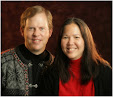

Our son had a great time in the Molding Your Pose course from ScholarsOnline.org.
The assignments:
1. Retell a myth or folktale in 150 words or less
2. Retell the same story in 50 words or less.
3. Retell the story as a newspaper article. Less than 500 words.
4. Retell the story from the first person perspective. Less than 500 words.
5. Retell the story with attention to the sounds of words. Less than 500 words.
6. Retell the story with humor. Less than 500 words.
7. Free choice. Our son chose a courtroom drama.
---
Our son chose the myth of Icarus. This assignment is practice for Logic or Rhetoric students who should be analyzing, imitating, and
1. Icarus in 150 words or less
In ancient Greece, Daedalus the inventor built a large Labyrinth for King Minos of Crete. However, King Minos, in a fit of anger, trapped Daedalus and his son Icarus in a tower. To escape, Daedalus made wings of feathers and wax. Daedalus warned Icarus that flying too close to the Sun would make his wings melt. They flew from the tower. Icarus, excited by flying, flew towards the Sun. The Sun melted his wings, Icarus fell into the sea, and drowned. Daedalus mourned the loss of his son, and to this day the sea into which Icarus fell has been known as the Icarian Sea.
---
2. Icarus in 50 words or less.
A man is imprisoned in a tower with his son. To escape, he makes wings. He warns the wings could melt too close to the Sun. The two depart. The man's son, excited by flying, flies towards the Sun. His wings melt, and he falls and drowns. His father mourns.
---
3. Icars as a newspaper article. Less than 500 words.
SON OF FAMOUS CRAFTSMAN DROWNS IN FREAK ACCIDENT
By Androcles
In a daring escape attempt, Icarus, son of renowned craftsman Daedalus, has died after plunging nearly 250 feet into the Aegean Sea. The 16-year-old boy tried to fly with a pair of makeshift wings made of wax and feathers, but the wax was melted by the heat of the Sun, and Icarus fell into the sea.
Erasmus, a fisherman at the time of the incident, says, "I was sitting there, fishing, and then I heard a bloodcurdling shriek. I looked up, and saw what looked like an enormous hawk, feathers flying in every direction. It fell towards me and I saw it was a human being."
According to Daedalus, he and the boy were imprisoned in a tower by King Minos of Crete. Court watchers disagree on whether King Minos imprisoned the two because of Daedalus's role in creating the Labyrinth or for some other motive. Daedalus refused to elaborate. Daedalus and his son escaped by making wings from wax and bird feathers found in the tower. He warned Icarus not to fly too close to the Sun. Shortly after the two took off, Icarus flew up towards the Sun, despite his father's repeated warnings. As he flew higher, his flight patterns became erratic, and feathers started falling off. Within minutes, Icarus plunged into the sea and drowned.
Demetrius, Icarus's tutor, says, "Icarus was bold, he was daring, he took risks. He was the first man to fly near the Sun. He was a remarkable lad. All of Greece should be proud of him."
Services will be held at the Temple of Apollo at 2:30 PM next Monday.
4. Icarus from the first person perspective. Less than 500 words.
Our loyal subjects, your king has heard some slanderous rumors of the craftsman Daedalus and the death of his son. Daedalus and Icarus of Crete were traitors to our country and they showed contempt towards the gods. They should not be treated as heroes of Greece, but rather as villains whose memories should be scorned.
One year ago, the Labyrinth was built to hold our stepson, the Minotaur. Only the builder, Daedalus, knew how to leave the Labyrinth, and it was learned he betrayed the secret to the Athenians. As many of you know, an Athenian, Theseus, recently murdered our stepson. Our grief has been great.
We could have had Daedalus and his son put to death immediately, but instead we chose to spare their lives. Rather than being grateful for our mercy, they chose to injure one of our palace guards and defy Mount Olympus. As we were descending the stairs of the Great Tower, we heard scuffling above us. We returned to see Icarus and Daedalus leaping off one of the highest floors. They wore crudely-fashioned wings of feathers and wax stolen from the palace grounds. Daedalus was shouting at his son, who was soaring too close to the Sun. Lord Apollo himself was offended by this brazen display, and he struck Icarus down from the sky.
5. Retell Icarus with attention to the sounds of words. Less than 500 words.
In days of old, the inventor Daedalus held the key
To King Minos' most urgent plight.
The monstrous Minotaur, mighty man-bull,
Threatened all of Crete.
Minotaur feasted on human flesh
Snorting, slobbering, shredding
Bellowing, booming, baying.
The earth thundering under his hooves.
Walls, trees, and houses quaking with every rage.
Finally a magnificent Labyrinth was made.
A tangle of twisting paths,
Bewildering blind alleys
At last restrained the beast.
Minos,
Cruel and corrupt,
Conceived a clever crime.
The inventor and his son were shackled
To keep the secret safe.
In a dank and grim prison tower
Daedalus and Icarus sat.
Dark, dismal, desperate.
Suddenly, a plan!
A flapping flurry of wings outside the window.
"I shall make some wings
So that we can escape this horrible place."
Daedalus and Icarus began to scrounge
For feathers from birds
Wax from the candle drippings left by the jailers.
Daedalus rubbed the wax roughly between his fingers.
At last they were finished.
Drawing close to his son,
Daedalus sternly warned,
"Do not fly too high. The Sun will melt your wings."
They squeezed through the bars of their cell.
They looked down at the green-blue ocean
With torrents of white foam crashing on the rocks below.
They were whipped by wild winds.
The two jumped off the edge.
Time stopped.
It looked as if they would plummet into the sea.
But they forced their wings together and swept up to the heavens.
Then Icarus felt a terrible change.
A drop on his shoulder.
He turned his head.
The wings were beginning to melt.
Suddenly feathers were flying off everywhere.
He silently screamed.
Daedalus saw his son plunge into the sea.
6. Retell Icarus with humor. Less than 500 words.
"Can I help you?"
"Sure. Where am I anyway?"
"In Tartarus."
"Tartarus?! What do you mean? I don't belong here!"
Icarus looked around. It was hard for him to see anything at first. A strong suffocating smell choked his lungs. Fire crackled around him. He was struggling to fly out of a river of tar with two wings strapped to his arms.
"I'm sorry, but I'm not in charge of the place. What happened to you, anyway?" a bearded old man asked, straining to push a giant boulder up a cliff.
"It was all Dad's fault. The King got mad at Dad so he put him in jail. I don't blame him; he always wants to be in charge. I guess it was because of that big maze he built. That was awesome. But the old king said he was 'a danger to the people of Crete' or something like that, which is crazy. I didn't do anything. I have no idea why he put me in jail."
Upon hearing the word "jail", the bearded man eyed Icarus suspiciously and said, "Well, I'm pretty busy. Excuse me, I have to get this boulder up the mountain."
"We were innocent!" Icarus shouted. "As I was saying, Pops and I were put in jail-- unfairly-- so he made some wings from some stuff around the room. My old man punched out some guards and the two of us flew away. I saw Dad was about to fly into a flock of seagulls, so I was trying to draw them away, but then all of a sudden my wings melted and I fell into the sea! Dad never warned me about that!"
After Icarus finished his story, the bearded man went back to pushing the boulder up the cliff.
"Er, weren't you supposed to help me?" Icarus asked. "Hello? I'm kinda stuck here. Help me? Please?"
Icarus sighed. There seemed to be no hope of getting out of this place.
Just then, the bearded old man came running down the side of the cliff and reached out towards Icarus.
Soon afterwards, the boulder rolled down the mountain and into the sea, where it landed on Icarus. While he struggled to get up, he heard the old man's voice shouting, "Sorry about that."
7. Retell Icarus as a courtroom drama.
The courtroom was hushed. Daedalus was on trial for his life. The prosecutor, Baltsaros, paced in front of the witness.
"Daedalus, is it true that you planned and commanded that the deceased, Icarus, use wax wings to flee the palace grounds at Crete?"
"Yes, but---"
"And is it true that the decision to use wax wings caused the untimely death of Icarus?"
"Yes."
Daedalus groaned. A member of the jury sighed in sympathy, to which the judge replied, " As jurors, be aware you are not to be swayed by sympathy."
Baltsaros continued.
"Did you realize that the wax in the wings you made would melt after intense exposure to the Sun?"
"Yes."
"Let it be known, gentlemen of the jury, that the immediate cause of Icarus' death was the melting of wax wings, resulting in his plunging to his death from a height of approximately 500 feet. No further questions, your honor."
Daedalus looked around anxiously. Daedalus's defense attorney, Adeipho, stood up. He was a tall, stately looking man, with dark hair and hollow cheeks.
"Daedalus, is it not true that you loved your son, and would never intentionally try to kill him?"
"Yes. We were trapped, and our lives were in danger. The experience was destroying Icarus from the inside out. There was no other way." By this point, Daedalus had broken into a cold sweat, which caused several members of the jury to look concerned.
"Daedalus, isn't it true that you made several attempts to warn Icarus about not flying too close to the Sun?"
"Yes. I told him. He knew it. I don't know why he flew so high. Maybe he lost track of how high he was flying. Maybe the winds pushed him up."
"Objection! This is pure speculation, your Honor," shouted Baltsaros.
"Objection sustained," the judge sternly replied, banging his gavel.
Daedalus looked relieved.
Adeipho looked up at the judge and said, "No further questions, your Honor."
"Baltsaros, would you like to cross-examine the witness?"
Baltsaros smirked and rose to his feet.
"Yes, your Honor. Daedalus, isn't it true that you knew Icarus had shown some rather rash judgment in the past?"
"No. What do you mean?"
"Isn't it true that Icarus jumped off the roof of the Temple of Apollo on a dare?"
"Yes, but--"
A gasp went up among the courtroom spectators.
"But he was just a young--"
"Just answer the question. Yes or no?"
"Yes."
"Gentlemen of the jury, even though Daedalus knew of Icarus' rash decisions in the past, he still decided to give him the instruments of his death. Therefore, you must find him guilty of involuntary manslaughter."
"Objection sustained."
The two attorneys made summary arguments to the jury. The jury recessed for hours. At last they returned.
"Members of the jury," asked the judge, "have you arrived at a decision?"
The foreman stood and shouted, "We find the defendant, Daedalus, innocent of all charges."
Daedalus cried tears of joy. He was free at last.
Sunday, May 29, 2011


Monday, May 23, 2011
Progymnasmata, Logic / Rhetoric: Writing an Argument Like St. Thomas Aquinas

From our son's latest assignments from "Molding Your Argument" - We've posted his submissions pro and con for movie censorship. The assignment is to write like St. Thomas Aquinas. In Summa Theologica, Thomas Aquinas presents his arguments in articles that have a specific structure:
1. A specific yes-or-no question. "Whether..." (utrum)
2. List of objections that begin with "It seems that...". The objections should be apparent proofs to the opposite of the thesis (aka
the opposite of the debate) - and should be arguments, not opinions (supportable by evidence) (oportet)
3. Indicate own position - "On the contrary..." - (sed contra) usually argument from authority.
4. "I answer that.." (respondeo dicens)- Thomas proves his own case - provides more background explanations. Aquinas explains how each objection went wrong.
With his permission, our son agreed to let us post his assignments:
PRO: It seems that Hollywood movies should be censored.
Objection 1: There have been professional studies that would appear to indicate that media violence increases real-world violence.
Objection 2: Movies can have a powerful desensitizing effect on morality. Studies have confirmed that people who are repeatedly exposed to media violence tend to be less disturbed or physiologically aroused when they witness real world violence, and have less sympathy for its victims.
Objection 3: There have been many confirmed instances in which violent movies have had a direct role in inspiring people to inflict pain, suffering, and death on others. At least nine murders around the world have been directly linked to the slasher film Scream.
I answer that: The right for movies to be free from censorship should be protected. Our country is founded upon principles of freedom of expression, and freedom of expression is necessary for a thriving democracy to have differences of opinion freely discussed, debated, and considered. Censoring objectionable content cuts off free discussion of controversial issues, and it can stifle opposing political opinions.
Reply to Objection 1: As violent media is constantly produced, the rate of violence among children has actually gone down.
Reply to Objection 2: The standards of moral behavior differ between people, religions, and cultures; different people have different reactions to media violence.
Reply to Objection 3: Mentally-unstable people may have negative reactions to media violence, but one has to consider the intent of the director. Is he glorifying violence, or is he portraying it in a negative light?
CON: It seems that movies should not be censored.
Objection 1: Many claim that censorship is in opposition to freedom of expression, and that it is in direct opposition to the First Amendment to the United States Constitution, which reads, in part, "Congress shall make no law... abridging the freedom of speech." Prohibiting content cuts off discussion of controversial worldviews, they say, and it can stifle opposing political opinions.
Objection 2: Some have said that there is no evidence that media violence has a notable effect on the public at large. Violence and immorality have been ubiquitous since the time of Adam and Eve, and they cannot always be prevented by media regulation.
Objection 3: Censorship is difficult to successfully regulate. Different people and cultures have different standards of morality; it is difficult to decide on a single standard of morality by which to prohibit objectionable material.
I answer that: Movies should be censored because messages of extreme violence and overt sexuality are harmful to the mental well-being of viewers and, ultimately, to the community as a whole.
Research in the field of psychology has shown that violence in the media increases aggression. Also, in the cases of murder and other serious crimes inflicting pain and suffering, perpetrators have admitted that movies had a role in inspiring their actions. Finally, movies have a powerful desensitizing effect on morality so that extreme negative images of sexuality and hatred can be a corrupting influence on impressionable audiences.
Reply to Objection 1: The protection of freedom of speech was never meant to endanger the lives of others, as media violence does. The Constitution also grants people the rights to life, liberty, and the pursuit of happiness, and media violence influences people to violate those unalienable rights.
Reply to Objection 2: Movie censorship might not prevent all immorality, but it would prevent some of the more severe instances. There have been several confirmed instances around the world of mass murderers being directly influenced by slasher films.
Reply to Objection 3: Our legislative and judicial system regulate morality all the time in terms of physical interaction and in terms of intention.
References: Peter Kreeft's excellent Summa of the Summa
Picture from Thomas Aquinas
Monday, July 12, 2010
Archeologists' Discovery May be King Arthur's Round Table

King Arthur's Round Table in Chester
photo King Arthur's Round Table
p.s. Sorry, got busy and we have another book due in at the publishers. I fell off the wagon writing this blog, but this news seem pretty cool...
Wednesday, December 23, 2009
Dickens at Christmas
 On Christmases past, we've read A Christmas Carol together as a family, but this year we settled for watching the old classic Alastair Sim movie as we have to finish Pickwick papers read-together. It was interesting to discover here that Dickens commissioned the artist John Leech to produce 4 hand-colored etchings and 4 wood engravings for the volume. Leech had been forced to abandon his medical studies (he excelled at anatomical drawing) because of the bankruptcy of his family, but was able to support himself as an artist and became the chief cartoonist for Punch.
Recently for our son's Veritas Press Omnibus classs he had fun with the challenge of writing in Charles Dickens' maximalist style. The assignment was to expand a sentence in a Dickensian fashion (for those of you who are curious, Dickens was not infrequently paid by the number of words...)
The starter sentence: "Beebo Appleby walked into the room, looked out the window, and patted his jacket pocket. He heard his mother's footsteps approaching and turned to the door to greet her."
Our son's: "Beebo Horatius Appleby wheezed and puffed through his plump, pursed lips as he waddled his massive girth into the narrow parlor of his cozy country cottage. In the dim light cast by the fireplace, one might almost have mistaken him for a great bespectacled Christmas goose (a goose, by the way, ample enough to feed a very large, and very hungry family.) His chubby face was ruddy and moist with perspiration, but the haunted look in his sunken, squinting eyes suggested this was less a product of physical exertion than of some secret strain. As his inertia carried him over to the window and he absently gazed at the gently drifting snow, glowing eerily in the moonlight like a ghost-filled graveyard, his hand moved, almost unbidden, to his breastpocket. In it was his father's last will and testament, which he realized, much to his discomfort, that he would have to discuss with his grieving mother. All of a sudden, he heard a rap-tap-tapping coming down the hall in his direction. He steeled himself in preparation for what he was about to endure, and turned towards the door."
Merry Christmas everyone!
Tuesday, December 8, 2009
Getting Ready for Christmas - Virtual Volunteering to Help a Christian Homeless Ministry

We're getting ready for Christmas, and we had been talking with our teen son about taking on a volunteer experience to 'give back' some of his blessings that have come his way. We also had talked about making a choice that might build on what we thought some of our personal gifts might be. As a result of this discussion, he searched the options for volunteering at ChristianVolunteering.org and decided to sign up as a web ministry intern with Hoskins Park Ministry, a ministry to the homeless in Charlotte, North Carolina. If you would like to support the homeless this Christmas season, consider donating to their cause. Theirs is really a mustard seed ministry, coming along side individual men, women, and families, helping bridge the gap between emergency shelters and independent living. They help provide safe homes, Christian
 fellowship, and practical living, medical, and other assistance that helps people get out of the cycle of poverty and abuse. There are limits that people can stay in emergency housing, and especially with the grim outlook on jobs, without places like Hoskins Park, the previously-homeless have a hard time getting back on track, holding down jobs, and being able to afford rent and utilities.
He's only just started working with Hoskins Park (first trying to improve the website design, but also search engine optimization), but we've had family meetings together trying to help with suggestions, and its already been a blessing...and hopefully we can offer some help to them. If you haven't thought engaging in a volunteer work as a family, we highly recommend it. Right now we just have great plans. Maybe later in the upcoming year, we'll be able to update with what we've been able to accomplish.
Friday, November 6, 2009
The Loyalist vs. Patriot Debate in American History

Our son had fun writing his Patriot position for the upcoming class debate in his Omnibus course. He is supposed to counter the argument that the colonialists should be grateful to England for her protection.
He found this link and the Declaration of Independence very helpful for his research. This is a great activity for synthesizing information about the origins of revolutionary war, making arguments, and persuasion / rhetoric.
His speech:
My fellow Patriots, it has been suggested that the Colonists should be grateful or indebted to the British. I vehemently disagree.
Some have said that we should be grateful to the British for fighting with us in the French and Indian War. After all, they say, our men fought alongside your men, and our men died alongside your men. The Colonists and the Crown both helped win the war against the French and the Indians, and both of us benefited from the defeat.
I pose that England did not enter the war simply to aid us, though, but solely to fatten herself. The British now hold vast tracts of land in America and freely trade fish and fur.
But, my fellow Patriots, there are many questions we should ask ourselves regarding our gratitude to Britain. Should we be grateful for the British blockade of our trade with the rest of the world, impoverishing the hardworking citizens of this country and making us reliant on the scraps King George gives us? Should we be grateful for England's refusal to pay us back for the loans we were forced to give Her Majesty for the war? Should we be grateful that Parliament has abolished our laws and stifled our entire system of government? And should we be grateful that the Crown has sent us armed troops for the purpose of threatening us, shielding them from any punishment should they murder our citizens? Should we be grateful for the deaths of Samuel Gray, James Caldwell, Samuel Maverick, Patrick Carr, and Crispus Attucks, all of whom were murdered by the British troops in the Boston Massacre?
Saturday, October 17, 2009
Classical Education: Don't Let This Happen to You...Oh no, I forgot to think!

You'd think classical educators (parents and formal teachers) would be among the last to commit this mistake, but perhaps this yet another mistake. Because classical texts are so difficult to decode in the first place, we think our work is done if our kids can read the Great Books, understand basically what they mean, and do well enough in the challenging work assigned to them. But it is surprisingly easy for all of us to be swept up in the work of this education (Latin nouns to decline, etc.) that we forget to think and we forget to ask our children to think, too.
Oh no, you might say. I'm not ready. I'm just getting through Aeschylus, and want to be through Zeno before I...
Well, there's no time like today. It's not enough to work through the texts. Our kids need practice thinking through why they believe what they do, and they need to practice thinking, considering other viewpoints, and really grappling to understand why they believe what they do, where are their gray areas, and what they might reconsider.
We've recently as a family been watching and debating the issues of Michael Sandel's Justice: What's the Right Thing to Do course at Harvard. It was last available on the Internet 3 years ago and its replaying with free videos on Youtube.com, Discussion guides, and Discussions forums (haven't tried the latter). The content is for older children and preview it to see if it might be appropriate for you. Sandel presents some extreme cases to get participants to reflect on what they believe and why.
Last night, we had a spirited discussion at home as Brock put our son in the 'hot seat' having to answer some of the discussion guide questions such as:
1. Is it unjust for the government to require people to wear seatbelts and not engage in self-endangering activities?
2. Should the government legalize narcotics?
3. Should there be a minimum wage?
We're on Lecture 3 out of 12, and Sandel discussed the viewpoint of Libertarianism and Robert Nozick. We've just finished Jeremy Bentham and Utilitarianism and John Stuart Mill's view of liberty and higher and lower good. A surprisingly wide discussion of topics arose from this film, rights of individuals and statism, the definition of good in a pluralistic society, economics, and political differences.
I think it's especially important to connect classical ideas with contemporary challenges and its programs like this that help bridge the gap
So whether you're a lifelong or newly minted student of classical education, don't forget to think!
Artist: Roy Lichtenstein
Thursday, September 24, 2009
Largest Anglo-Saxon Treasure Found in the UK
An amateur treasure hunter with a metal detector found the largest Anglo-Saxon treasure ever discovered. It was found on a friend's farm. The inscription above is from the Bible.
Anglo Saxon Treasure

Anglo Saxon Treasure
Wednesday, July 8, 2009
Classical Argumentation like the Ancients

This summer our son is taking a course "Molding Your Argument" from ScholarsOnline.org It's already turning out to be a great course. The assignments were first to write brief paragraphs argue the pros and cons of a position (he chose censorship in the movies". Next he was asked to elaborate on the paragraphs with specific guidelines (3 sentences pieces of evidence per paragraph). His next assignment is even tougher - they are to emulate the argumentation style of Thomas Aquinas. Aquinas apparently begins arguing a position that he does not believe in - then provides a compelling counter-argument, ending with a pithy summation.
I think it's so great to give kids the chance to manipulate arguments independent of the content - because that's a lot of the art of writing - and much can be gained from imitation. For gifted kids who get the analysis-paralysis ("Don't know what I want to say because I can think of pros and cons boths ways") - this is a perfect outlet.
He gave us his permission to post his work:
Week 1:
Should movies be censored?
Movies should be censored because messages of extreme violence and overt sexuality are harmful to the mental well-being of viewers and, ultimately, to the community as a whole.
Research in the field of psychology has shown that violence in the media increases aggression. Also, in the cases of murder and other serious crimes inflicting pain and suffering, perpetrators have admitted that movies had a role in inspiring their actions. Finally, movies have a powerful desensitizing effect on morality so that extreme negative images of sexuality and hatred can be a corrupting influence on impressionable audiences.
Given this clear evidence of the impact movies have on viewers, movies should be censored.
Movies should not be censored because it would inhibit freedom of expression, it would not deter violence or immorality, and it is unconstitutional.
Freedom of expression is an essential requirement of any democracy and censorship is in complete opposition to freedom of expression. Censorship would not deter violence or immorality; the 1930s, the time of the movie censorship guidelines of the Hays Code, was one of the most violent and corrupt times in American history.
Finally, movies should not be censored because doing so would violate the First Amendment to the United States Constitution, which reads, in part, "Congress shall make no law... abridging the freedom of speech."
Movies should not be censored, because freedom of expression is an essential feature of our society.
---
Week 2:
Movies should be censored because messages of extreme violence and overt sexuality are harmful to the mental well-being of viewers and, ultimately, to society as a whole.
First of all, research in the field of psychology has shown that violence in the media increases aggression. Psychological researchers have observed that children who watch violent shows are much more likely to hit other children and break toys. Older children who watch violent television at home were more likely to behave more aggressively in school, and when researchers followed these children over the years, they discovered that they were more likely to get in trouble with the law as teenagers.When these teenagers were 30 years old, they were more likely to be convicted of serious crimes, to use violence to discipline their children, and to treat their spouses aggressively. All of the data demonstrates the powerful effect that movies and television have on young people.
Second, movies have a powerful desensitizing effect on morality so that extreme negative images of sexuality and hatred can corrupt impressionable audiences. Studies have shown that that people who are repeatedly exposed to media violence tend to be less disturbed when they witness real world violence, and have less sympathy for its victims. Viewers who watch large amounts of media violence are less likely to show increases in physiological arousal, such as increased heart rate or change in galvanic skin responses, when they view violent acts. Also, in studies of men and women who were repeatedly exposed to sexual violence in the media, researchers have shown that attitudes and behaviors changed. Both the men and the women showed less sympathy and empathy towards rape victims. Sensitivity to the suffering and conditions of others is essential to living a moral life and a requirement of a moral society.
Third, there are also many instances in which violent movies have had a direct role in inspiring people to inflict pain, suffering, and death on others. For instance, the release of the horror thriller film Scream influenced a series of copycat murders. At least nine murders around the world have been directly linked to the movie. Movies, video games, and music with violent and hateful content have also been implicated in many mass shootings, such as the Columbine massacre. Extremely violent movies have had and will continue to have a negative effect on individuals, as well as society as a whole.
Given this clear evidence of the impact movies have on viewers, extreme content in movies should be censored. A failure to do so would inflict irreparable damage upon the moral fabric of our society. The moral health of our society is based on sensitivity, empathy, and sympathy toward the suffering of others, and an ability to interact through non-aggressive means. Overwhelming evidence indicates that when morally repugnant content escapes censorship, negative effects on society have resulted, including the increased aggressiveness and lawlessness of young people, more immoral acts, including the harming and killing of people, and the desensitization of men and women to violence and hatred. When movie makers transgress the boundaries of human decency, society has a right to censor corrupting and hatred-inciting material.
---
Week 3:
The right for movies to be free from censorship must be protected. Our country is founded upon principles of freedom of expression, and freedom of expression is necessary for a thriving democracy to have differences of opinion freely discussed, debated, and considered. Despite the good intentions of those who advocate the censorship of movies, there is no evidence that banning objectionable movie content would deter violence or immorality. In practice, also, it is not possible to successfully regulate censorship because morals and values differ among all people. Therefore, I strongly urge that movies should not be subjected to censorship.
For any democracy, freedom of expression is necessary for a government to truly be ruled by the people, and censorship is in complete opposition to freedom of expression. In fact, it is in direct opposition to the First Amendment to the United States Constitution, which reads, in part, "Congress shall make no law... abridging the freedom of speech."
Prohibiting content cuts off discussion of controversial worldviews, and it can stifle opposing opinions.
Tyrannies and totalitarian dictatorships thrive on censorship and a lack of freedom of expression.
Do we want our democracy to become a dictatorships?
Some argue that movie censorship deters violence or immorality, but there is no good evidence that this is the case.
The 1930s, the time of the strict movie censorship guidelines of the Hays Code, was a time of gangsters and organized crime.
Violence and immorality have been ubiquitous since the time of Adam and Eve, and they cannot be prevented by media regulation.
If violent media such as movies and games are responsible for inciting violence, why has the rate of violence among children decreased since the 1990s?
Media violence is not to blame for the irresponsible actions of other people.
Finally, censorship is impossible to successfully regulate.
The standards of moral behavior differ between people, religions, and cultures; there is no single standard of morality by which to prohibit objectionable material. Who is qualified to decide what is appropriate and what is not?
It is also impossible to regulate all the intentions of a film; for instance, a filmmaker with an anti-war sentiment might depict extreme images of violence and death, hoping to encourage his viewers to hate war.
Who is to judge?
In conclusion, it is vital that we protect the right for movies to be free from censorship because freedom of expression, whether it be in the spoken word, in print, or in film, is an essential feature of our free society. Although it is often alleged that the media incites violent and immoral behavior, violence and immorality have always been part and parcel of the human condition, and they always will be. In fact, there is evidence that violent acts in the media actually decreases real-world violence. In practice, censorship is also impossible to regulate and implement, because no single person or group can decide what is or is not appropriate, and censors cannot ban the bad thoughts and actions of others. Movie censorship is misguided and dangerous and should be opposed.
Picture Roman Orator
Tuesday, June 16, 2009
Revealing the Parthenon's True Colors
Using a very sensitive technique, archeologists have been able to find traces of residual paint on figures within the Parthenon, like Egyptian Blue on the belt of Poseidon. 

Parthenon's hidden color


Parthenon's hidden color
Friday, May 1, 2009
Writing a Dante's Inferno-Like Satire
Our son recently chose to write a Dante's inferno-like satire for his Omnibus class through Veritas Academy. Here it is:
The Heaven of the Philosophers
by

Krister Eide
At the midpoint of my adolescence, I found myself in a dark cavern. There was a dim red glow. The air was thick, musty, and hot, as in some ancient and poorly air-conditioned library in the middle of summer. I found it difficult to breathe without collapsing.
I saw the faint outline of a man in the distance. From what I could gather, he appeared to be a middle-aged man, and as with many middle-aged men there appeared to be a good deal of him about the middle. He came forward with a reassuring smile on his face and stood beside me, then put his hand on my shoulder.
"My name is Clive. Don't worry. I'm going to guide you. You will see some fascinating things in this place." He gave me a wry smile and gestured at me to follow him.
I followed Clive into a large, dimly-lit room. The walls, the ceiling, and the floor were all made up of dingy, warped mirrors. Throughout the room, I saw men standing on pedestals, all wearing different kinds of clothing, and each facing one of the mirrors. I inched my way through the crowded room towards one of the men who grabbed my fancy by his distinguished appearance. He was a handsome-looking person who wore a powdered wig and a red velvet waistcoat with brass buttons. He was looking around the room, observing his reflection from various angles, then he caught a glimpse of us staring at him in his mirror. He smiled, adjusted his clothing, and turned towards us.
"Come in, come in", the man said. "My name is François-Marie Arouet, but you might know me better by my nom de plume of Voltaire." He turned to look at himself in the mirror again. "You caught me in the middle of one of my finest soliloquies, and I cannot be troubled to begin again. As I was saying, this simpleton Rousseau appears to demand that we walk on all fours like... like common beasts!" The man adjusted his wig. "Man, the most perfect of creatures, the archetype of angels, behaving like savages! But man, it is a noble creature. And mankind at its height--" here he adopted a noble pose and glanced at himself fondly in the mirror from the corner of his eye "--is a paragon of reason."
"What?!" came an astonished and angry cry from across the room. Another man, presumably Rousseau, leapt off his pedestal and walked towards the first man, flailing his arms in anger. "You corrupt devil!" he shouted. "I never stated that men should act like savages! We have not the purity of soul now to resume our native innocence even if we should wish it, so corrupted have we been by the evils of society! I simply stated that men in their current condition should not have everything they want handed to them on a platter! You're putting false words into my mouth. You are a vain and foolish man! You are the very face of corruption itself, dressing like a fop with your finely laced shoes and your powdered wig! You are the perfect demonstration and proof of the truth of my brilliant observations!"
"C'est ridicule! You're just reinforcing my point, now aren't you?" Voltaire's face turned the color of a beet as he clenched his fists. "You want all men to be savages, and you act like a savage! How dare you interrupt me with such nonsense!" Voltaire replied.
Rousseau responded by knocking Voltaire off his pedestal and onto the ground. Voltaire lunged at Rousseau, and the two wrestled on the ground. Demons started to surround the two men, cheering on the fight. Clive whispered into my ear, "Perhaps we'd better move on to the next area."
The two of us walked on down a dark, musty corridor of mirrors. The air grew heavier and heavier, until we finally caught sight of a tiny lantern that dimly illuminated the scenery. When we got closer to it, I saw that it was being carried by an old, bearded man wearing a toga. He looked at us rather skeptically. "I am looking for a human being," he explained, "but all I can find are rascals and scoundrels." He took another look at us, and appeared disappointed by what he saw.
"Have you looked for a carpenter from Nazareth?" Clive replied. "He is the light of the world."
"Bah!" The man scowled and walked past us.
We eventually found ourselves in a somewhat larger room. I saw a dark-haired, bespectacled, mustachioed man wearing a smoking jacket. He was standing on top of a pedestal, similar to those Voltaire and Rousseau had stood upon. Despite his predicament, he seemed rather cheerful. He seemed to observe my surprise at his attitude, and this made him smile all the more. "Ah, you seem to be surprised by how contented I am."
"I must admit--" I began, but the man cut me off.
"That's because you do not understand the greatness of the tragic artistic consciousness. I will my greatness, therefore I am great, even in these surroundings. I create my heaven, therefore heaven surrounds me. I am as happy in this heaven of hells as I was in Germany! Never forget, man is the play-actor of his ideals. Little wonder these fools around me still act as fools. Yet I, I am still the tragic hero."
"It is grand, I admit," I replied, "but don't you think it's a little silly when you could go to the true heaven if you chose?"
"Ah, but you see, it wouldn't be true to me. The truest mark of a great man is his overcoming of the prejudice of truth over the creative fantasy of the individual will. Where would I be if I preferred the true heaven over my heaven? I would be a mere bit-player in God's drama, rather than the star, writer, and director of my own--uh, could you move a bit, you're standing in my light."
I shifted a bit and the man went on with this self-aggrandizing drivel. We heard words like "master" and "slave" and "power" and "will", but all these words began to swirl together in my mind. Clive looked at me and said, "Perhaps its best to move on to where this more light and more air to breathe." I was very grateful indeed!
Reference: Photograph is from Dore's Inferno
The Heaven of the Philosophers
by

Krister Eide
At the midpoint of my adolescence, I found myself in a dark cavern. There was a dim red glow. The air was thick, musty, and hot, as in some ancient and poorly air-conditioned library in the middle of summer. I found it difficult to breathe without collapsing.
I saw the faint outline of a man in the distance. From what I could gather, he appeared to be a middle-aged man, and as with many middle-aged men there appeared to be a good deal of him about the middle. He came forward with a reassuring smile on his face and stood beside me, then put his hand on my shoulder.
"My name is Clive. Don't worry. I'm going to guide you. You will see some fascinating things in this place." He gave me a wry smile and gestured at me to follow him.
I followed Clive into a large, dimly-lit room. The walls, the ceiling, and the floor were all made up of dingy, warped mirrors. Throughout the room, I saw men standing on pedestals, all wearing different kinds of clothing, and each facing one of the mirrors. I inched my way through the crowded room towards one of the men who grabbed my fancy by his distinguished appearance. He was a handsome-looking person who wore a powdered wig and a red velvet waistcoat with brass buttons. He was looking around the room, observing his reflection from various angles, then he caught a glimpse of us staring at him in his mirror. He smiled, adjusted his clothing, and turned towards us.
"Come in, come in", the man said. "My name is François-Marie Arouet, but you might know me better by my nom de plume of Voltaire." He turned to look at himself in the mirror again. "You caught me in the middle of one of my finest soliloquies, and I cannot be troubled to begin again. As I was saying, this simpleton Rousseau appears to demand that we walk on all fours like... like common beasts!" The man adjusted his wig. "Man, the most perfect of creatures, the archetype of angels, behaving like savages! But man, it is a noble creature. And mankind at its height--" here he adopted a noble pose and glanced at himself fondly in the mirror from the corner of his eye "--is a paragon of reason."
"What?!" came an astonished and angry cry from across the room. Another man, presumably Rousseau, leapt off his pedestal and walked towards the first man, flailing his arms in anger. "You corrupt devil!" he shouted. "I never stated that men should act like savages! We have not the purity of soul now to resume our native innocence even if we should wish it, so corrupted have we been by the evils of society! I simply stated that men in their current condition should not have everything they want handed to them on a platter! You're putting false words into my mouth. You are a vain and foolish man! You are the very face of corruption itself, dressing like a fop with your finely laced shoes and your powdered wig! You are the perfect demonstration and proof of the truth of my brilliant observations!"
"C'est ridicule! You're just reinforcing my point, now aren't you?" Voltaire's face turned the color of a beet as he clenched his fists. "You want all men to be savages, and you act like a savage! How dare you interrupt me with such nonsense!" Voltaire replied.
Rousseau responded by knocking Voltaire off his pedestal and onto the ground. Voltaire lunged at Rousseau, and the two wrestled on the ground. Demons started to surround the two men, cheering on the fight. Clive whispered into my ear, "Perhaps we'd better move on to the next area."
The two of us walked on down a dark, musty corridor of mirrors. The air grew heavier and heavier, until we finally caught sight of a tiny lantern that dimly illuminated the scenery. When we got closer to it, I saw that it was being carried by an old, bearded man wearing a toga. He looked at us rather skeptically. "I am looking for a human being," he explained, "but all I can find are rascals and scoundrels." He took another look at us, and appeared disappointed by what he saw.
"Have you looked for a carpenter from Nazareth?" Clive replied. "He is the light of the world."
"Bah!" The man scowled and walked past us.
We eventually found ourselves in a somewhat larger room. I saw a dark-haired, bespectacled, mustachioed man wearing a smoking jacket. He was standing on top of a pedestal, similar to those Voltaire and Rousseau had stood upon. Despite his predicament, he seemed rather cheerful. He seemed to observe my surprise at his attitude, and this made him smile all the more. "Ah, you seem to be surprised by how contented I am."
"I must admit--" I began, but the man cut me off.
"That's because you do not understand the greatness of the tragic artistic consciousness. I will my greatness, therefore I am great, even in these surroundings. I create my heaven, therefore heaven surrounds me. I am as happy in this heaven of hells as I was in Germany! Never forget, man is the play-actor of his ideals. Little wonder these fools around me still act as fools. Yet I, I am still the tragic hero."
"It is grand, I admit," I replied, "but don't you think it's a little silly when you could go to the true heaven if you chose?"
"Ah, but you see, it wouldn't be true to me. The truest mark of a great man is his overcoming of the prejudice of truth over the creative fantasy of the individual will. Where would I be if I preferred the true heaven over my heaven? I would be a mere bit-player in God's drama, rather than the star, writer, and director of my own--uh, could you move a bit, you're standing in my light."
I shifted a bit and the man went on with this self-aggrandizing drivel. We heard words like "master" and "slave" and "power" and "will", but all these words began to swirl together in my mind. Clive looked at me and said, "Perhaps its best to move on to where this more light and more air to breathe." I was very grateful indeed!
Reference: Photograph is from Dore's Inferno
Friday, April 10, 2009
Pysanky!: Decorating Ukranian Easter Eggs
 A pysanka (Ukrainian: писанка, plural: pysanky) is a Ukrainian Easter egg, decorated using beeswax in a sort of crayon-resist approach using dyes. This is our first year trying Pysanky and we loved it! Using an inexpensive kit from Michaels, we worked on these a little bit over the past two days and will do a few more before Easter.
Apparently, some people just use raw eggs, but we blew them out (punch both ends with a needle, mix yolk, then drain through one of the holes(we used an old nasal syringe from our baby days to help blow them out). The draw the designs in pencil, cover parts of the design in wax, then dye them in progressively darker dyes, covering the colors we want to preserve in wax in between colors.
Lots of tips at LearnPysanky.com. Also a friend told us that the dyes keep well if they are frozen in ice cube trays and stored in a bag. If you use blown out eggs, you can also insert a wire and use them a Christmas ornaments or an egg tree...
Blessings to you all this Easter!

Wikipedia: Pysanky
Friday, March 27, 2009
William Byrd: Versatile Composer of the Renaissance
 William Byrd was a celebrated English composer of the Renaissance. Haec Dies is a motet from Missale Romanum. Byrd studied music under Thomas Tallis, composed Catholic masses and Anglican church services. He fell in and out of favor though, living through chaotic political and religious times of Queen Elizabeth I, James I, and Henry VIII. In addition to religious compositions, Byrd also composed madrigals and Elizabethan dance music.
A motet is a musical piece in different part with words. The word motet comes from the Latin "movere", to move. Unlike medieval motets, Renaissance motets were polyphonic with imitative counterpoint.
Latin: Haec dies quam fecit Dominus: Exultemus et laetemur in ea. Alleluia.
English: This is the day that the Lord has made: let us rejoice and be glad in it. Alleluia.
William Byrd biography
Tuesday, January 27, 2009
Classical Education in an Economic Recession

In the continuing gloom of an economic recession, it is possible to continue getting a first-rate classical education on a shoestring. Before redoubling your efforts, it might be a good idea to ask yourself some questions -
1. Why am I doing this? There are many possible answers to this question, but some answers we have arrived at are the opportunity for students to develop their worldview beyond the present. In our view, a classical education offers an unparalleled opportunity to look at human events, religious and secular philosophies, crisis, challenge, and progress without a one-sided perspective of the bias of the present time.
2. What do I what my student to get out of this? Again the answers will vary, but some of our answers include: an ability to think deeply, compare, and analyze information, an ability to make and defend decisions, persuade others, and synthesize new ideas or possibilities. No wonder classical-trained individual go into diverse careers as consultants and analysts in business and tech disciplines, law, medicine, politics, and humanities.
One of the greatest opportunities of classically-educated individuals is to make difficult decisions under changing conditions. The time is ripe.
If you find yourself facing new challenges with the economic recession:
1. Find the blessing in your burden: Cultivate more time with your children, discuss with them how you are making tough and prudent choices with changing conditions and an uncertain future. Model resilience yourself. Read biographies and watch inspiring movies together (Denzel Washington's Great Debaters, Pursuit of Happyness, biographies of Alexander Hamilton, Corrie Ten Boom, Eric Liddell).
2.Use Internet Resources - if you don't have access at home, head to the library!
Examples: Ancient Greek History Course by Donald Kagan (Open Yale Courses)
Physics for Future Presidents (more Conceptual) from UC Berkeley
Lists of more University webcasts / podcasts at Stingy Scholar and
Do It Yourself Scholar
Many AP teachers also post all their lecture notes and Powerpoints on the Internet. Some are also developing blog or wikis to make it more interactive.
For Latin (and any other language for that matter), here are extensive resources available - for instance,
KET Distance Learning Latin Courses
If you need to hear it, check out Wheelock's Latin Pronunciation pages.
Many great books are available for free online:
Project Gutenberg
Online Books at Penn
Christian Classics Ethereal Library
Baldwin Online Childrens Literature Project
Charlotte Mason Classical Education (Ambleside Online)
Used books can be swapped or bought at used book prices at:

Deep discounts on new or used curricula can be found at Amazon.com
Does your child have a print disability? If so, he or she may qualify for the wonderful free resource Bookshare.org
Photo reference: Laocoon struggling with his children.(Wikipedia)
Tuesday, January 13, 2009
Classical, Visual, and Rhetorical Grammar
"Let no man, therefore, look down on the elements of grammar as
small matters; not because it requires great labor to distinguish
consonants from vowels, and to divide them into the proper
number of semivowels and mutes, but because, to those entering
the recesses, as it were, of this temple, there will appear much
subtlety on points, which may not only sharpen the wits of boys,
but may exercise even the deepest erudition and knowledge."
—Quintilian
I happen to be one of those people who breaks out in a cold sweat with the thought of grammar, but although I have learned more grammar than I thought possible when our kids started learning Latin, I've had to dig even deeper as we have dyslexia running in family.
Happily, we've discovered some wonderful resources for classical and visual approaches to grammar - and it sure beats memorizing all the rules in Warriner's.
If you need to be persuaded of the importance of grammar, check out Making a Case for Rhetorical Grammar, but in our case, we needed to troubleshoot some of the Writing problems of visual thinkers, so we wanted something reasonably direct, accessible, and memorable. Thankfully, we seem to have found this in a writer's workshop grammar book, Mechanically Inclined . There are some faults in this book (caveat emptor: some of the content of writing samples are poorly chosen - e.g. violent, tasteless etc.), but it is a very visual approach to grammar (like Image Grammar
 , but with better organization) and it satisfies a definite need for visual learners struggling with grammar conventions.
For every problem, Mechanically Inclined presents a student mistake, analysis of the mistake, correct examples from literature, and a visual scaffolding exercise that walks a student through correct grammatical writing. For example, in a chapter on dangling modifiers, the author provided examples of participial phrases used as openers, interrupters, and closers:
Wagging its tail, the dog approached me. Opener
The dog, wagging its tail, approached me. Interrupter
The dog approached me, wagging its tail. Closer
This approach is helpful because not because it gives students practice with sentence manipulation, but also because it allows grammatical conventions (like commas) to be naturally internalized through reading and writing, rather than rote memorization of a list of disembodied rules.
For older students, there is Rhetorical Grammar , a probably college-level text that teaches the art of grammar and persuasive writing.
Excerpt from a chapter on Sentence Rhythm:

The word eloquently has shifted the limelight from the topic of the speech to the senator's style of speaking; and, in doing so, it has set up a different expectation in the reader. We would not be surprised if the subject of the next sentence turned out to be he or she (the senator) rather than they (the homeless).
Haven't found many strong visual or rhetorical grammar sites freely available on the Internet, but let us know if you know of good ones. There are excerpts from Image Grammar here and here. We did find this nice link on Elaboration, however.
Institute for Excellence in Writing does have a new series entitled Classical Rhetoric Through Structure and Style. A sample chapter is posted here: here.
small matters; not because it requires great labor to distinguish
consonants from vowels, and to divide them into the proper
number of semivowels and mutes, but because, to those entering
the recesses, as it were, of this temple, there will appear much
subtlety on points, which may not only sharpen the wits of boys,
but may exercise even the deepest erudition and knowledge."
—Quintilian
I happen to be one of those people who breaks out in a cold sweat with the thought of grammar, but although I have learned more grammar than I thought possible when our kids started learning Latin, I've had to dig even deeper as we have dyslexia running in family.
Happily, we've discovered some wonderful resources for classical and visual approaches to grammar - and it sure beats memorizing all the rules in Warriner's.
If you need to be persuaded of the importance of grammar, check out Making a Case for Rhetorical Grammar, but in our case, we needed to troubleshoot some of the Writing problems of visual thinkers, so we wanted something reasonably direct, accessible, and memorable. Thankfully, we seem to have found this in a writer's workshop grammar book, Mechanically Inclined
. There are some faults in this book (caveat emptor: some of the content of writing samples are poorly chosen - e.g. violent, tasteless etc.), but it is a very visual approach to grammar (like Image Grammar, but with better organization) and it satisfies a definite need for visual learners struggling with grammar conventions.For every problem, Mechanically Inclined presents a student mistake, analysis of the mistake, correct examples from literature, and a visual scaffolding exercise that walks a student through correct grammatical writing. For example, in a chapter on dangling modifiers, the author provided examples of participial phrases used as openers, interrupters, and closers:
Wagging its tail, the dog approached me. Opener
The dog, wagging its tail, approached me. Interrupter
The dog approached me, wagging its tail. Closer
This approach is helpful because not because it gives students practice with sentence manipulation, but also because it allows grammatical conventions (like commas) to be naturally internalized through reading and writing, rather than rote memorization of a list of disembodied rules.
For older students, there is Rhetorical Grammar
, a probably college-level text that teaches the art of grammar and persuasive writing. Excerpt from a chapter on Sentence Rhythm:

The word eloquently has shifted the limelight from the topic of the speech to the senator's style of speaking; and, in doing so, it has set up a different expectation in the reader. We would not be surprised if the subject of the next sentence turned out to be he or she (the senator) rather than they (the homeless).
Haven't found many strong visual or rhetorical grammar sites freely available on the Internet, but let us know if you know of good ones. There are excerpts from Image Grammar here and here. We did find this nice link on Elaboration, however.
Institute for Excellence in Writing does have a new series entitled Classical Rhetoric Through Structure and Style. A sample chapter is posted here: here.
Saturday, December 20, 2008
Christmas Through Illuminated Manuscripts

If you enjoy illuminated manuscripts, check out Christmas: Medieval Illuminated Manuscripts. At the Getty Museum site, there's Making of a Medieval Book.
From a bishop's note to monk copyists at Durham Cathedral (reference):
"You write with the pen of memory on the parchment of pure conscience, scraped by the knife of Divine fear, smoothed by the pumice of heavenly desires, and whitened by the chalk of holy thoughts. The ruler is the Will of God. The split nib is the joint love of God and our neighbor. Coloured inks are heavenly grace. The exemplar is the life of Christ."
Pages were made from stretched animal skins and the feathers of geese or swans were used as quills. Illumination (from Latin illuminaire, to light up)came from burnishing gold leaf (coins hammered and flaked) into figures outlined with leadpoint. Paints were made from mineral and plant extracts as well as chemical reactions.
Finished manuscripts were sewn together and bound in leather, wood, or decorative fabric.
Merry Christmas!
Classical School Blog: Do-It-Yourself Illuminated Manuscripts and Monks Day
Thursday, November 27, 2008
Thanksgiving Scroll and Puritan Prayers
Have a blessed Thanksgiving!

At right the Thanksgiving scroll of the Dead Sea scrolls, written on leather and 10 feet long, dating from about 200 B.C. It's very similar to the Psalms. Below, the Puritans arriving in America and praying.
 The prayer below is A Puritan Prayer for Thanksgiving
O MY GOD,
Thou fairest, greatest, first of all objects,
my heart admires, adores, loves Thee,
for my little vessel is as full as it can be,
and I would pour out all that fullness before Thee in ceaseless flow.
When I think upon and converse with Thee
ten thousand delightful thoughts spring up,
ten thousand sources of pleasure are unsealed,
ten thousand refreshing joys spread over my heart,
crowding into every moment of happiness.
I bless Thee for the soul Thou hast created,
for adorning it, sanctifying it, though it is fixed in barren soil;
for the body Thou hast given me,
for preserving its strength and vigor,
for providing senses to enjoy delights,
for the ease and freedom of my limbs,
for hands, eyes, ears that do Thy bidding;
for Thy royal bounty providing my daily support,
for a full table and overflowing cup,
for appetite, taste, sweetness,
for social joys of relatives and friends,
for ability to serve others,
for a heart that feels sorrows and necessities,
for a mind to care for my fellow-men,
for opportunities of spreading happiness around,
for loved ones in the joys of heaven,
for my own expectation of seeing Thee clearly.
I love Thee above the powers of language to express,
for what Thou art to Thy creatures.
Increase my love, O my God, through time and eternity. Amen

At right the Thanksgiving scroll of the Dead Sea scrolls, written on leather and 10 feet long, dating from about 200 B.C. It's very similar to the Psalms. Below, the Puritans arriving in America and praying.
 The prayer below is A Puritan Prayer for Thanksgiving
O MY GOD,
Thou fairest, greatest, first of all objects,
my heart admires, adores, loves Thee,
for my little vessel is as full as it can be,
and I would pour out all that fullness before Thee in ceaseless flow.
When I think upon and converse with Thee
ten thousand delightful thoughts spring up,
ten thousand sources of pleasure are unsealed,
ten thousand refreshing joys spread over my heart,
crowding into every moment of happiness.
I bless Thee for the soul Thou hast created,
for adorning it, sanctifying it, though it is fixed in barren soil;
for the body Thou hast given me,
for preserving its strength and vigor,
for providing senses to enjoy delights,
for the ease and freedom of my limbs,
for hands, eyes, ears that do Thy bidding;
for Thy royal bounty providing my daily support,
for a full table and overflowing cup,
for appetite, taste, sweetness,
for social joys of relatives and friends,
for ability to serve others,
for a heart that feels sorrows and necessities,
for a mind to care for my fellow-men,
for opportunities of spreading happiness around,
for loved ones in the joys of heaven,
for my own expectation of seeing Thee clearly.
I love Thee above the powers of language to express,
for what Thou art to Thy creatures.
Increase my love, O my God, through time and eternity. Amen
Monday, November 3, 2008
Old English Verse

" I have always best enjoyed things in a foreign language, or one so remote as to feel like it (such as Anglo-Saxon)." - J.R.R. Tolkien
As our son's Omnibus course wends its way through early English ecclesiastical history (Bede), we also finished watching he Lord of the Rings trilogy and Old Anglo Saxon verse seem to be the perfect complement.
In Saxon England, professional storytellers called scops would wander from town to town, receiving food and lodging in exchange for good stories sung or told.

From Beowulf's court: "'... now and then the poet raised his voice, resonant in Heorot... Then Hrothgar, leader in battle, was entertained with music - harp and voice in harmony. The strings were plucked, many a song rehearsed, when it was the turn of Hrothgar's poet to please men at the mead bench, perform in the hall... Thus was the lay sung, the song of the poet. The hall echoed with joy, waves of noise broke out along the benches..."
Caedmon is the earliest English poet whose name is known. He was an Anglo Saxon herdsman who was ignorant of the "art of song", but called to write music in a dream. From Bede: "...some man stood by him in his dream and hailed and greeted him and addressed him by his name: 'Caedmon, sing me something.' Then he answered and said: 'I do not know how to sing and for that reason I went out from this feast and went hither, because I did not know how to sing at all.' Again he said, he who was speaking with him: 'Nevertheless, you must sing.' Then he said: 'What must I sing?' Said he: 'Sing to me of the first Creation.' When he received this answer, then he began immediately to sing in praise of God the Creator verses and words which he had never heard, whose order is this:
.

Nu scylun hergan hefaenricaes uard
metudæs maecti end his modgidanc
uerc uuldurfadur— sue he uundra gihuaes
eci dryctin or astelidæ
he aerist scop aelda barnum
heben til hrofe haleg scepen
tha middungeard moncynnæs uard
eci dryctin æfter tiadæ
firum foldu frea allmectig
Now [we] must honour the guardian of heaven,
the might of the architect, and his purpose,
the work of the father of glory
— as he, the eternal lord, established the beginning of wonders.
He, the holy creator,
first created heaven as a roof for the children of men.
Then the guardian of mankind, the eternal lord,
the lord almighty, afterwards appointed the middle earth,
the lands, for men.
To hear it read in Old English, click the links at the bottom of the page here.
Caedmon became a zealous monk and an inspirational religious poet living at Whitby Abbey (above).
Caedmon's Hymn
The Wanderer
Longfellow: Elegaic Verse
Old English Aloud
Wikipedia: Heroic Verse
Longfellow: Elegaic Verse
Old English Aloud
Wikipedia: Heroic Verse
Brief Powerpoint on Anglo Saxon Poetry
Exeter Book of Riddles
Image Beowulf
Music and Verse
Wikipedia: Caedmon
Saturday, October 18, 2008
William Billings: Early Colonial Composer of Hymns and Fugues

Now shall my inward joy arise,
And burst into a song;
Almighty Love inspires my heart;
and Pleasure tunes my tongue. (Africa - William Billings)
I'm enjoying a wonderful collection of hymns and fugues from Colonial American William Billings (1746-1800). An excerpt from his famous a capella Africa .
Billings was an unconventional character (we confess a soft spot for these...), but his gift of music making is unquestionable. He blends medieval harmonies with complicated fugues, and an personal irascibility that caused no small upheaval among singing believers. From a New England magazine in the 1800's: "He spurned the rules of art, such as there were, and sung out of the abundance of his heart..."
More about the life of William Billings
"He was poor and uneducated -- he supported himself much of the time as a tanner. But he also took up music when he was young and was teaching choral singing by the age of 22.
Biographers call him a gargoyle. He was blind in one eye with a short leg and a withered arm. But that's only the beginning. He practiced what a contemporary called "an uncommon negligence of person," and he was hopelessly addicted to tobacco -- constantly inhaling handfuls of snuff. That may explain why he only lived to the age of 54. He had a stentorian, tobacco-damaged bass voice and he seemed uninterested in any easy beauty of sound."
Tuesday, September 30, 2008
The Wisdom of St. Augustine

"Since love grows within you, so beauty grows. For love is the beauty of the soul." - St. Augustine
Our son is taking his first class with Veritas Press Academy (Omnibus II), and in order to keep up with readings, we've found I've had to read with him - but it has turned out to be a wonderful blessing for me! We are reading St. Augustine's Confessions now, and it is an extraordinary book.
Many historians see Augustine as the bridge between antiquity and the middle ages. It is remarkable to see how perceptive Augustine was for his times, but also jarring to think that the world would fall into the Dark Ages after Augustine, and think how much of the history, literature, and philosophy of Western Civilization would have been lost if monasteries hadn't sought to preserve the old texts and documents.
Confessions is Augustine's spiritual autobiography. Much of it is running conversation with God, beginning with his earliest recollections, then traveling in some detail through important life experiences that brought him to his faith. Augustine's upbringing will resonate with many young people today - his father valued a secular education (a classical education), but was not a Christian and therefore did not particularly consider spiritual factors in his upbringing.
It is easy to see the boy (and later man) in Confessions because Augustine writes in such a frank and colorful conversational tone - "Even now I cannot fully understand why the Greek language, which I learned as a child, was so distasteful to me...I suppose that Greek boys think the same about Virgil when they are forced to study him as I was forced to study Homer..." But this frankness turns its attention to reckless, painful, and sinful periods in his life - and his eventual turning to God.
There are many good things in Confessions for young adult readers - the subtle-and-not-so-subtle temptations that arise from friends, misguided teachers and cults, and muddy-headed thinking, and it is a surprisingly easy read - perhaps because of Augustine's skills as a rhetorician.
I find it hard to put into words what I've gained most from reading Confessions, but I think the best way I can think to say it is that it's given me a greater vision of the depth that's possible in my walk with God. Augustine has wonderful prayers and praises, true, but what is even more inspiring is how he was able to surrender more and more of his view of the world and life to God, and how as a result his worldview and life became much greater.
"Go forth on your path, as it exists only through your walking."
Biography of St. Augustine | Christian Classics Ethereal Library
Wikipedia: Augustine
Wikiquote: Augustine
Subscribe to:
Posts (Atom)

