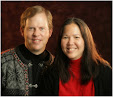

Our son had a great time in the Molding Your Pose course from ScholarsOnline.org.
The assignments:
1. Retell a myth or folktale in 150 words or less
2. Retell the same story in 50 words or less.
3. Retell the story as a newspaper article. Less than 500 words.
4. Retell the story from the first person perspective. Less than 500 words.
5. Retell the story with attention to the sounds of words. Less than 500 words.
6. Retell the story with humor. Less than 500 words.
7. Free choice. Our son chose a courtroom drama.
---
Our son chose the myth of Icarus. This assignment is practice for Logic or Rhetoric students who should be analyzing, imitating, and
1. Icarus in 150 words or less
In ancient Greece, Daedalus the inventor built a large Labyrinth for King Minos of Crete. However, King Minos, in a fit of anger, trapped Daedalus and his son Icarus in a tower. To escape, Daedalus made wings of feathers and wax. Daedalus warned Icarus that flying too close to the Sun would make his wings melt. They flew from the tower. Icarus, excited by flying, flew towards the Sun. The Sun melted his wings, Icarus fell into the sea, and drowned. Daedalus mourned the loss of his son, and to this day the sea into which Icarus fell has been known as the Icarian Sea.
---
2. Icarus in 50 words or less.
A man is imprisoned in a tower with his son. To escape, he makes wings. He warns the wings could melt too close to the Sun. The two depart. The man's son, excited by flying, flies towards the Sun. His wings melt, and he falls and drowns. His father mourns.
---
3. Icars as a newspaper article. Less than 500 words.
SON OF FAMOUS CRAFTSMAN DROWNS IN FREAK ACCIDENT
By Androcles
In a daring escape attempt, Icarus, son of renowned craftsman Daedalus, has died after plunging nearly 250 feet into the Aegean Sea. The 16-year-old boy tried to fly with a pair of makeshift wings made of wax and feathers, but the wax was melted by the heat of the Sun, and Icarus fell into the sea.
Erasmus, a fisherman at the time of the incident, says, "I was sitting there, fishing, and then I heard a bloodcurdling shriek. I looked up, and saw what looked like an enormous hawk, feathers flying in every direction. It fell towards me and I saw it was a human being."
According to Daedalus, he and the boy were imprisoned in a tower by King Minos of Crete. Court watchers disagree on whether King Minos imprisoned the two because of Daedalus's role in creating the Labyrinth or for some other motive. Daedalus refused to elaborate. Daedalus and his son escaped by making wings from wax and bird feathers found in the tower. He warned Icarus not to fly too close to the Sun. Shortly after the two took off, Icarus flew up towards the Sun, despite his father's repeated warnings. As he flew higher, his flight patterns became erratic, and feathers started falling off. Within minutes, Icarus plunged into the sea and drowned.
Demetrius, Icarus's tutor, says, "Icarus was bold, he was daring, he took risks. He was the first man to fly near the Sun. He was a remarkable lad. All of Greece should be proud of him."
Services will be held at the Temple of Apollo at 2:30 PM next Monday.
4. Icarus from the first person perspective. Less than 500 words.
Our loyal subjects, your king has heard some slanderous rumors of the craftsman Daedalus and the death of his son. Daedalus and Icarus of Crete were traitors to our country and they showed contempt towards the gods. They should not be treated as heroes of Greece, but rather as villains whose memories should be scorned.
One year ago, the Labyrinth was built to hold our stepson, the Minotaur. Only the builder, Daedalus, knew how to leave the Labyrinth, and it was learned he betrayed the secret to the Athenians. As many of you know, an Athenian, Theseus, recently murdered our stepson. Our grief has been great.
We could have had Daedalus and his son put to death immediately, but instead we chose to spare their lives. Rather than being grateful for our mercy, they chose to injure one of our palace guards and defy Mount Olympus. As we were descending the stairs of the Great Tower, we heard scuffling above us. We returned to see Icarus and Daedalus leaping off one of the highest floors. They wore crudely-fashioned wings of feathers and wax stolen from the palace grounds. Daedalus was shouting at his son, who was soaring too close to the Sun. Lord Apollo himself was offended by this brazen display, and he struck Icarus down from the sky.
5. Retell Icarus with attention to the sounds of words. Less than 500 words.
In days of old, the inventor Daedalus held the key
To King Minos' most urgent plight.
The monstrous Minotaur, mighty man-bull,
Threatened all of Crete.
Minotaur feasted on human flesh
Snorting, slobbering, shredding
Bellowing, booming, baying.
The earth thundering under his hooves.
Walls, trees, and houses quaking with every rage.
Finally a magnificent Labyrinth was made.
A tangle of twisting paths,
Bewildering blind alleys
At last restrained the beast.
Minos,
Cruel and corrupt,
Conceived a clever crime.
The inventor and his son were shackled
To keep the secret safe.
In a dank and grim prison tower
Daedalus and Icarus sat.
Dark, dismal, desperate.
Suddenly, a plan!
A flapping flurry of wings outside the window.
"I shall make some wings
So that we can escape this horrible place."
Daedalus and Icarus began to scrounge
For feathers from birds
Wax from the candle drippings left by the jailers.
Daedalus rubbed the wax roughly between his fingers.
At last they were finished.
Drawing close to his son,
Daedalus sternly warned,
"Do not fly too high. The Sun will melt your wings."
They squeezed through the bars of their cell.
They looked down at the green-blue ocean
With torrents of white foam crashing on the rocks below.
They were whipped by wild winds.
The two jumped off the edge.
Time stopped.
It looked as if they would plummet into the sea.
But they forced their wings together and swept up to the heavens.
Then Icarus felt a terrible change.
A drop on his shoulder.
He turned his head.
The wings were beginning to melt.
Suddenly feathers were flying off everywhere.
He silently screamed.
Daedalus saw his son plunge into the sea.
6. Retell Icarus with humor. Less than 500 words.
"Can I help you?"
"Sure. Where am I anyway?"
"In Tartarus."
"Tartarus?! What do you mean? I don't belong here!"
Icarus looked around. It was hard for him to see anything at first. A strong suffocating smell choked his lungs. Fire crackled around him. He was struggling to fly out of a river of tar with two wings strapped to his arms.
"I'm sorry, but I'm not in charge of the place. What happened to you, anyway?" a bearded old man asked, straining to push a giant boulder up a cliff.
"It was all Dad's fault. The King got mad at Dad so he put him in jail. I don't blame him; he always wants to be in charge. I guess it was because of that big maze he built. That was awesome. But the old king said he was 'a danger to the people of Crete' or something like that, which is crazy. I didn't do anything. I have no idea why he put me in jail."
Upon hearing the word "jail", the bearded man eyed Icarus suspiciously and said, "Well, I'm pretty busy. Excuse me, I have to get this boulder up the mountain."
"We were innocent!" Icarus shouted. "As I was saying, Pops and I were put in jail-- unfairly-- so he made some wings from some stuff around the room. My old man punched out some guards and the two of us flew away. I saw Dad was about to fly into a flock of seagulls, so I was trying to draw them away, but then all of a sudden my wings melted and I fell into the sea! Dad never warned me about that!"
After Icarus finished his story, the bearded man went back to pushing the boulder up the cliff.
"Er, weren't you supposed to help me?" Icarus asked. "Hello? I'm kinda stuck here. Help me? Please?"
Icarus sighed. There seemed to be no hope of getting out of this place.
Just then, the bearded old man came running down the side of the cliff and reached out towards Icarus.
Soon afterwards, the boulder rolled down the mountain and into the sea, where it landed on Icarus. While he struggled to get up, he heard the old man's voice shouting, "Sorry about that."
7. Retell Icarus as a courtroom drama.
The courtroom was hushed. Daedalus was on trial for his life. The prosecutor, Baltsaros, paced in front of the witness.
"Daedalus, is it true that you planned and commanded that the deceased, Icarus, use wax wings to flee the palace grounds at Crete?"
"Yes, but---"
"And is it true that the decision to use wax wings caused the untimely death of Icarus?"
"Yes."
Daedalus groaned. A member of the jury sighed in sympathy, to which the judge replied, " As jurors, be aware you are not to be swayed by sympathy."
Baltsaros continued.
"Did you realize that the wax in the wings you made would melt after intense exposure to the Sun?"
"Yes."
"Let it be known, gentlemen of the jury, that the immediate cause of Icarus' death was the melting of wax wings, resulting in his plunging to his death from a height of approximately 500 feet. No further questions, your honor."
Daedalus looked around anxiously. Daedalus's defense attorney, Adeipho, stood up. He was a tall, stately looking man, with dark hair and hollow cheeks.
"Daedalus, is it not true that you loved your son, and would never intentionally try to kill him?"
"Yes. We were trapped, and our lives were in danger. The experience was destroying Icarus from the inside out. There was no other way." By this point, Daedalus had broken into a cold sweat, which caused several members of the jury to look concerned.
"Daedalus, isn't it true that you made several attempts to warn Icarus about not flying too close to the Sun?"
"Yes. I told him. He knew it. I don't know why he flew so high. Maybe he lost track of how high he was flying. Maybe the winds pushed him up."
"Objection! This is pure speculation, your Honor," shouted Baltsaros.
"Objection sustained," the judge sternly replied, banging his gavel.
Daedalus looked relieved.
Adeipho looked up at the judge and said, "No further questions, your Honor."
"Baltsaros, would you like to cross-examine the witness?"
Baltsaros smirked and rose to his feet.
"Yes, your Honor. Daedalus, isn't it true that you knew Icarus had shown some rather rash judgment in the past?"
"No. What do you mean?"
"Isn't it true that Icarus jumped off the roof of the Temple of Apollo on a dare?"
"Yes, but--"
A gasp went up among the courtroom spectators.
"But he was just a young--"
"Just answer the question. Yes or no?"
"Yes."
"Gentlemen of the jury, even though Daedalus knew of Icarus' rash decisions in the past, he still decided to give him the instruments of his death. Therefore, you must find him guilty of involuntary manslaughter."
"Objection sustained."
The two attorneys made summary arguments to the jury. The jury recessed for hours. At last they returned.
"Members of the jury," asked the judge, "have you arrived at a decision?"
The foreman stood and shouted, "We find the defendant, Daedalus, innocent of all charges."
Daedalus cried tears of joy. He was free at last.
Showing posts with label writing. Show all posts
Showing posts with label writing. Show all posts
Sunday, May 29, 2011


Wednesday, July 8, 2009
Classical Argumentation like the Ancients

This summer our son is taking a course "Molding Your Argument" from ScholarsOnline.org It's already turning out to be a great course. The assignments were first to write brief paragraphs argue the pros and cons of a position (he chose censorship in the movies". Next he was asked to elaborate on the paragraphs with specific guidelines (3 sentences pieces of evidence per paragraph). His next assignment is even tougher - they are to emulate the argumentation style of Thomas Aquinas. Aquinas apparently begins arguing a position that he does not believe in - then provides a compelling counter-argument, ending with a pithy summation.
I think it's so great to give kids the chance to manipulate arguments independent of the content - because that's a lot of the art of writing - and much can be gained from imitation. For gifted kids who get the analysis-paralysis ("Don't know what I want to say because I can think of pros and cons boths ways") - this is a perfect outlet.
He gave us his permission to post his work:
Week 1:
Should movies be censored?
Movies should be censored because messages of extreme violence and overt sexuality are harmful to the mental well-being of viewers and, ultimately, to the community as a whole.
Research in the field of psychology has shown that violence in the media increases aggression. Also, in the cases of murder and other serious crimes inflicting pain and suffering, perpetrators have admitted that movies had a role in inspiring their actions. Finally, movies have a powerful desensitizing effect on morality so that extreme negative images of sexuality and hatred can be a corrupting influence on impressionable audiences.
Given this clear evidence of the impact movies have on viewers, movies should be censored.
Movies should not be censored because it would inhibit freedom of expression, it would not deter violence or immorality, and it is unconstitutional.
Freedom of expression is an essential requirement of any democracy and censorship is in complete opposition to freedom of expression. Censorship would not deter violence or immorality; the 1930s, the time of the movie censorship guidelines of the Hays Code, was one of the most violent and corrupt times in American history.
Finally, movies should not be censored because doing so would violate the First Amendment to the United States Constitution, which reads, in part, "Congress shall make no law... abridging the freedom of speech."
Movies should not be censored, because freedom of expression is an essential feature of our society.
---
Week 2:
Movies should be censored because messages of extreme violence and overt sexuality are harmful to the mental well-being of viewers and, ultimately, to society as a whole.
First of all, research in the field of psychology has shown that violence in the media increases aggression. Psychological researchers have observed that children who watch violent shows are much more likely to hit other children and break toys. Older children who watch violent television at home were more likely to behave more aggressively in school, and when researchers followed these children over the years, they discovered that they were more likely to get in trouble with the law as teenagers.When these teenagers were 30 years old, they were more likely to be convicted of serious crimes, to use violence to discipline their children, and to treat their spouses aggressively. All of the data demonstrates the powerful effect that movies and television have on young people.
Second, movies have a powerful desensitizing effect on morality so that extreme negative images of sexuality and hatred can corrupt impressionable audiences. Studies have shown that that people who are repeatedly exposed to media violence tend to be less disturbed when they witness real world violence, and have less sympathy for its victims. Viewers who watch large amounts of media violence are less likely to show increases in physiological arousal, such as increased heart rate or change in galvanic skin responses, when they view violent acts. Also, in studies of men and women who were repeatedly exposed to sexual violence in the media, researchers have shown that attitudes and behaviors changed. Both the men and the women showed less sympathy and empathy towards rape victims. Sensitivity to the suffering and conditions of others is essential to living a moral life and a requirement of a moral society.
Third, there are also many instances in which violent movies have had a direct role in inspiring people to inflict pain, suffering, and death on others. For instance, the release of the horror thriller film Scream influenced a series of copycat murders. At least nine murders around the world have been directly linked to the movie. Movies, video games, and music with violent and hateful content have also been implicated in many mass shootings, such as the Columbine massacre. Extremely violent movies have had and will continue to have a negative effect on individuals, as well as society as a whole.
Given this clear evidence of the impact movies have on viewers, extreme content in movies should be censored. A failure to do so would inflict irreparable damage upon the moral fabric of our society. The moral health of our society is based on sensitivity, empathy, and sympathy toward the suffering of others, and an ability to interact through non-aggressive means. Overwhelming evidence indicates that when morally repugnant content escapes censorship, negative effects on society have resulted, including the increased aggressiveness and lawlessness of young people, more immoral acts, including the harming and killing of people, and the desensitization of men and women to violence and hatred. When movie makers transgress the boundaries of human decency, society has a right to censor corrupting and hatred-inciting material.
---
Week 3:
The right for movies to be free from censorship must be protected. Our country is founded upon principles of freedom of expression, and freedom of expression is necessary for a thriving democracy to have differences of opinion freely discussed, debated, and considered. Despite the good intentions of those who advocate the censorship of movies, there is no evidence that banning objectionable movie content would deter violence or immorality. In practice, also, it is not possible to successfully regulate censorship because morals and values differ among all people. Therefore, I strongly urge that movies should not be subjected to censorship.
For any democracy, freedom of expression is necessary for a government to truly be ruled by the people, and censorship is in complete opposition to freedom of expression. In fact, it is in direct opposition to the First Amendment to the United States Constitution, which reads, in part, "Congress shall make no law... abridging the freedom of speech."
Prohibiting content cuts off discussion of controversial worldviews, and it can stifle opposing opinions.
Tyrannies and totalitarian dictatorships thrive on censorship and a lack of freedom of expression.
Do we want our democracy to become a dictatorships?
Some argue that movie censorship deters violence or immorality, but there is no good evidence that this is the case.
The 1930s, the time of the strict movie censorship guidelines of the Hays Code, was a time of gangsters and organized crime.
Violence and immorality have been ubiquitous since the time of Adam and Eve, and they cannot be prevented by media regulation.
If violent media such as movies and games are responsible for inciting violence, why has the rate of violence among children decreased since the 1990s?
Media violence is not to blame for the irresponsible actions of other people.
Finally, censorship is impossible to successfully regulate.
The standards of moral behavior differ between people, religions, and cultures; there is no single standard of morality by which to prohibit objectionable material. Who is qualified to decide what is appropriate and what is not?
It is also impossible to regulate all the intentions of a film; for instance, a filmmaker with an anti-war sentiment might depict extreme images of violence and death, hoping to encourage his viewers to hate war.
Who is to judge?
In conclusion, it is vital that we protect the right for movies to be free from censorship because freedom of expression, whether it be in the spoken word, in print, or in film, is an essential feature of our free society. Although it is often alleged that the media incites violent and immoral behavior, violence and immorality have always been part and parcel of the human condition, and they always will be. In fact, there is evidence that violent acts in the media actually decreases real-world violence. In practice, censorship is also impossible to regulate and implement, because no single person or group can decide what is or is not appropriate, and censors cannot ban the bad thoughts and actions of others. Movie censorship is misguided and dangerous and should be opposed.
Picture Roman Orator
Friday, May 1, 2009
Writing a Dante's Inferno-Like Satire
Our son recently chose to write a Dante's inferno-like satire for his Omnibus class through Veritas Academy. Here it is:
The Heaven of the Philosophers
by

Krister Eide
At the midpoint of my adolescence, I found myself in a dark cavern. There was a dim red glow. The air was thick, musty, and hot, as in some ancient and poorly air-conditioned library in the middle of summer. I found it difficult to breathe without collapsing.
I saw the faint outline of a man in the distance. From what I could gather, he appeared to be a middle-aged man, and as with many middle-aged men there appeared to be a good deal of him about the middle. He came forward with a reassuring smile on his face and stood beside me, then put his hand on my shoulder.
"My name is Clive. Don't worry. I'm going to guide you. You will see some fascinating things in this place." He gave me a wry smile and gestured at me to follow him.
I followed Clive into a large, dimly-lit room. The walls, the ceiling, and the floor were all made up of dingy, warped mirrors. Throughout the room, I saw men standing on pedestals, all wearing different kinds of clothing, and each facing one of the mirrors. I inched my way through the crowded room towards one of the men who grabbed my fancy by his distinguished appearance. He was a handsome-looking person who wore a powdered wig and a red velvet waistcoat with brass buttons. He was looking around the room, observing his reflection from various angles, then he caught a glimpse of us staring at him in his mirror. He smiled, adjusted his clothing, and turned towards us.
"Come in, come in", the man said. "My name is François-Marie Arouet, but you might know me better by my nom de plume of Voltaire." He turned to look at himself in the mirror again. "You caught me in the middle of one of my finest soliloquies, and I cannot be troubled to begin again. As I was saying, this simpleton Rousseau appears to demand that we walk on all fours like... like common beasts!" The man adjusted his wig. "Man, the most perfect of creatures, the archetype of angels, behaving like savages! But man, it is a noble creature. And mankind at its height--" here he adopted a noble pose and glanced at himself fondly in the mirror from the corner of his eye "--is a paragon of reason."
"What?!" came an astonished and angry cry from across the room. Another man, presumably Rousseau, leapt off his pedestal and walked towards the first man, flailing his arms in anger. "You corrupt devil!" he shouted. "I never stated that men should act like savages! We have not the purity of soul now to resume our native innocence even if we should wish it, so corrupted have we been by the evils of society! I simply stated that men in their current condition should not have everything they want handed to them on a platter! You're putting false words into my mouth. You are a vain and foolish man! You are the very face of corruption itself, dressing like a fop with your finely laced shoes and your powdered wig! You are the perfect demonstration and proof of the truth of my brilliant observations!"
"C'est ridicule! You're just reinforcing my point, now aren't you?" Voltaire's face turned the color of a beet as he clenched his fists. "You want all men to be savages, and you act like a savage! How dare you interrupt me with such nonsense!" Voltaire replied.
Rousseau responded by knocking Voltaire off his pedestal and onto the ground. Voltaire lunged at Rousseau, and the two wrestled on the ground. Demons started to surround the two men, cheering on the fight. Clive whispered into my ear, "Perhaps we'd better move on to the next area."
The two of us walked on down a dark, musty corridor of mirrors. The air grew heavier and heavier, until we finally caught sight of a tiny lantern that dimly illuminated the scenery. When we got closer to it, I saw that it was being carried by an old, bearded man wearing a toga. He looked at us rather skeptically. "I am looking for a human being," he explained, "but all I can find are rascals and scoundrels." He took another look at us, and appeared disappointed by what he saw.
"Have you looked for a carpenter from Nazareth?" Clive replied. "He is the light of the world."
"Bah!" The man scowled and walked past us.
We eventually found ourselves in a somewhat larger room. I saw a dark-haired, bespectacled, mustachioed man wearing a smoking jacket. He was standing on top of a pedestal, similar to those Voltaire and Rousseau had stood upon. Despite his predicament, he seemed rather cheerful. He seemed to observe my surprise at his attitude, and this made him smile all the more. "Ah, you seem to be surprised by how contented I am."
"I must admit--" I began, but the man cut me off.
"That's because you do not understand the greatness of the tragic artistic consciousness. I will my greatness, therefore I am great, even in these surroundings. I create my heaven, therefore heaven surrounds me. I am as happy in this heaven of hells as I was in Germany! Never forget, man is the play-actor of his ideals. Little wonder these fools around me still act as fools. Yet I, I am still the tragic hero."
"It is grand, I admit," I replied, "but don't you think it's a little silly when you could go to the true heaven if you chose?"
"Ah, but you see, it wouldn't be true to me. The truest mark of a great man is his overcoming of the prejudice of truth over the creative fantasy of the individual will. Where would I be if I preferred the true heaven over my heaven? I would be a mere bit-player in God's drama, rather than the star, writer, and director of my own--uh, could you move a bit, you're standing in my light."
I shifted a bit and the man went on with this self-aggrandizing drivel. We heard words like "master" and "slave" and "power" and "will", but all these words began to swirl together in my mind. Clive looked at me and said, "Perhaps its best to move on to where this more light and more air to breathe." I was very grateful indeed!
Reference: Photograph is from Dore's Inferno
The Heaven of the Philosophers
by

Krister Eide
At the midpoint of my adolescence, I found myself in a dark cavern. There was a dim red glow. The air was thick, musty, and hot, as in some ancient and poorly air-conditioned library in the middle of summer. I found it difficult to breathe without collapsing.
I saw the faint outline of a man in the distance. From what I could gather, he appeared to be a middle-aged man, and as with many middle-aged men there appeared to be a good deal of him about the middle. He came forward with a reassuring smile on his face and stood beside me, then put his hand on my shoulder.
"My name is Clive. Don't worry. I'm going to guide you. You will see some fascinating things in this place." He gave me a wry smile and gestured at me to follow him.
I followed Clive into a large, dimly-lit room. The walls, the ceiling, and the floor were all made up of dingy, warped mirrors. Throughout the room, I saw men standing on pedestals, all wearing different kinds of clothing, and each facing one of the mirrors. I inched my way through the crowded room towards one of the men who grabbed my fancy by his distinguished appearance. He was a handsome-looking person who wore a powdered wig and a red velvet waistcoat with brass buttons. He was looking around the room, observing his reflection from various angles, then he caught a glimpse of us staring at him in his mirror. He smiled, adjusted his clothing, and turned towards us.
"Come in, come in", the man said. "My name is François-Marie Arouet, but you might know me better by my nom de plume of Voltaire." He turned to look at himself in the mirror again. "You caught me in the middle of one of my finest soliloquies, and I cannot be troubled to begin again. As I was saying, this simpleton Rousseau appears to demand that we walk on all fours like... like common beasts!" The man adjusted his wig. "Man, the most perfect of creatures, the archetype of angels, behaving like savages! But man, it is a noble creature. And mankind at its height--" here he adopted a noble pose and glanced at himself fondly in the mirror from the corner of his eye "--is a paragon of reason."
"What?!" came an astonished and angry cry from across the room. Another man, presumably Rousseau, leapt off his pedestal and walked towards the first man, flailing his arms in anger. "You corrupt devil!" he shouted. "I never stated that men should act like savages! We have not the purity of soul now to resume our native innocence even if we should wish it, so corrupted have we been by the evils of society! I simply stated that men in their current condition should not have everything they want handed to them on a platter! You're putting false words into my mouth. You are a vain and foolish man! You are the very face of corruption itself, dressing like a fop with your finely laced shoes and your powdered wig! You are the perfect demonstration and proof of the truth of my brilliant observations!"
"C'est ridicule! You're just reinforcing my point, now aren't you?" Voltaire's face turned the color of a beet as he clenched his fists. "You want all men to be savages, and you act like a savage! How dare you interrupt me with such nonsense!" Voltaire replied.
Rousseau responded by knocking Voltaire off his pedestal and onto the ground. Voltaire lunged at Rousseau, and the two wrestled on the ground. Demons started to surround the two men, cheering on the fight. Clive whispered into my ear, "Perhaps we'd better move on to the next area."
The two of us walked on down a dark, musty corridor of mirrors. The air grew heavier and heavier, until we finally caught sight of a tiny lantern that dimly illuminated the scenery. When we got closer to it, I saw that it was being carried by an old, bearded man wearing a toga. He looked at us rather skeptically. "I am looking for a human being," he explained, "but all I can find are rascals and scoundrels." He took another look at us, and appeared disappointed by what he saw.
"Have you looked for a carpenter from Nazareth?" Clive replied. "He is the light of the world."
"Bah!" The man scowled and walked past us.
We eventually found ourselves in a somewhat larger room. I saw a dark-haired, bespectacled, mustachioed man wearing a smoking jacket. He was standing on top of a pedestal, similar to those Voltaire and Rousseau had stood upon. Despite his predicament, he seemed rather cheerful. He seemed to observe my surprise at his attitude, and this made him smile all the more. "Ah, you seem to be surprised by how contented I am."
"I must admit--" I began, but the man cut me off.
"That's because you do not understand the greatness of the tragic artistic consciousness. I will my greatness, therefore I am great, even in these surroundings. I create my heaven, therefore heaven surrounds me. I am as happy in this heaven of hells as I was in Germany! Never forget, man is the play-actor of his ideals. Little wonder these fools around me still act as fools. Yet I, I am still the tragic hero."
"It is grand, I admit," I replied, "but don't you think it's a little silly when you could go to the true heaven if you chose?"
"Ah, but you see, it wouldn't be true to me. The truest mark of a great man is his overcoming of the prejudice of truth over the creative fantasy of the individual will. Where would I be if I preferred the true heaven over my heaven? I would be a mere bit-player in God's drama, rather than the star, writer, and director of my own--uh, could you move a bit, you're standing in my light."
I shifted a bit and the man went on with this self-aggrandizing drivel. We heard words like "master" and "slave" and "power" and "will", but all these words began to swirl together in my mind. Clive looked at me and said, "Perhaps its best to move on to where this more light and more air to breathe." I was very grateful indeed!
Reference: Photograph is from Dore's Inferno
Tuesday, January 13, 2009
Classical, Visual, and Rhetorical Grammar
"Let no man, therefore, look down on the elements of grammar as
small matters; not because it requires great labor to distinguish
consonants from vowels, and to divide them into the proper
number of semivowels and mutes, but because, to those entering
the recesses, as it were, of this temple, there will appear much
subtlety on points, which may not only sharpen the wits of boys,
but may exercise even the deepest erudition and knowledge."
—Quintilian
I happen to be one of those people who breaks out in a cold sweat with the thought of grammar, but although I have learned more grammar than I thought possible when our kids started learning Latin, I've had to dig even deeper as we have dyslexia running in family.
Happily, we've discovered some wonderful resources for classical and visual approaches to grammar - and it sure beats memorizing all the rules in Warriner's.
If you need to be persuaded of the importance of grammar, check out Making a Case for Rhetorical Grammar, but in our case, we needed to troubleshoot some of the Writing problems of visual thinkers, so we wanted something reasonably direct, accessible, and memorable. Thankfully, we seem to have found this in a writer's workshop grammar book, Mechanically Inclined . There are some faults in this book (caveat emptor: some of the content of writing samples are poorly chosen - e.g. violent, tasteless etc.), but it is a very visual approach to grammar (like Image Grammar
 , but with better organization) and it satisfies a definite need for visual learners struggling with grammar conventions.
For every problem, Mechanically Inclined presents a student mistake, analysis of the mistake, correct examples from literature, and a visual scaffolding exercise that walks a student through correct grammatical writing. For example, in a chapter on dangling modifiers, the author provided examples of participial phrases used as openers, interrupters, and closers:
Wagging its tail, the dog approached me. Opener
The dog, wagging its tail, approached me. Interrupter
The dog approached me, wagging its tail. Closer
This approach is helpful because not because it gives students practice with sentence manipulation, but also because it allows grammatical conventions (like commas) to be naturally internalized through reading and writing, rather than rote memorization of a list of disembodied rules.
For older students, there is Rhetorical Grammar , a probably college-level text that teaches the art of grammar and persuasive writing.
Excerpt from a chapter on Sentence Rhythm:

The word eloquently has shifted the limelight from the topic of the speech to the senator's style of speaking; and, in doing so, it has set up a different expectation in the reader. We would not be surprised if the subject of the next sentence turned out to be he or she (the senator) rather than they (the homeless).
Haven't found many strong visual or rhetorical grammar sites freely available on the Internet, but let us know if you know of good ones. There are excerpts from Image Grammar here and here. We did find this nice link on Elaboration, however.
Institute for Excellence in Writing does have a new series entitled Classical Rhetoric Through Structure and Style. A sample chapter is posted here: here.
small matters; not because it requires great labor to distinguish
consonants from vowels, and to divide them into the proper
number of semivowels and mutes, but because, to those entering
the recesses, as it were, of this temple, there will appear much
subtlety on points, which may not only sharpen the wits of boys,
but may exercise even the deepest erudition and knowledge."
—Quintilian
I happen to be one of those people who breaks out in a cold sweat with the thought of grammar, but although I have learned more grammar than I thought possible when our kids started learning Latin, I've had to dig even deeper as we have dyslexia running in family.
Happily, we've discovered some wonderful resources for classical and visual approaches to grammar - and it sure beats memorizing all the rules in Warriner's.
If you need to be persuaded of the importance of grammar, check out Making a Case for Rhetorical Grammar, but in our case, we needed to troubleshoot some of the Writing problems of visual thinkers, so we wanted something reasonably direct, accessible, and memorable. Thankfully, we seem to have found this in a writer's workshop grammar book, Mechanically Inclined
. There are some faults in this book (caveat emptor: some of the content of writing samples are poorly chosen - e.g. violent, tasteless etc.), but it is a very visual approach to grammar (like Image Grammar, but with better organization) and it satisfies a definite need for visual learners struggling with grammar conventions.For every problem, Mechanically Inclined presents a student mistake, analysis of the mistake, correct examples from literature, and a visual scaffolding exercise that walks a student through correct grammatical writing. For example, in a chapter on dangling modifiers, the author provided examples of participial phrases used as openers, interrupters, and closers:
Wagging its tail, the dog approached me. Opener
The dog, wagging its tail, approached me. Interrupter
The dog approached me, wagging its tail. Closer
This approach is helpful because not because it gives students practice with sentence manipulation, but also because it allows grammatical conventions (like commas) to be naturally internalized through reading and writing, rather than rote memorization of a list of disembodied rules.
For older students, there is Rhetorical Grammar
, a probably college-level text that teaches the art of grammar and persuasive writing. Excerpt from a chapter on Sentence Rhythm:

The word eloquently has shifted the limelight from the topic of the speech to the senator's style of speaking; and, in doing so, it has set up a different expectation in the reader. We would not be surprised if the subject of the next sentence turned out to be he or she (the senator) rather than they (the homeless).
Haven't found many strong visual or rhetorical grammar sites freely available on the Internet, but let us know if you know of good ones. There are excerpts from Image Grammar here and here. We did find this nice link on Elaboration, however.
Institute for Excellence in Writing does have a new series entitled Classical Rhetoric Through Structure and Style. A sample chapter is posted here: here.
Monday, January 7, 2008
The Fall of Ancient Greek Civilization - The Peloponnesian War

Our son's midterm paper topic (Schola Tutorials) over Christmas break was Who Should Have Won the Peloponnesian War. I confess to knowing very little about the Peloponnesian War, but the topic piqued my curiosity as I remember from some of my friends at Harvard that Thucydides' The History of the Peloponnesian War was mandatory reading for Gov 40, the killer pregov / prelaw course (like the premeds' Organic Chem). So why should this old book be required reading?
We've been wending our way through The Baldwin Project's The Story of the Greeks and I came to realize that there is a lot to learn from this War for any citizen of a democratic country. Athens should have won. It wasted its talented leaders and could not act decisively to unite the different dissenting voices within its city states. Human vices of arrogance, greed, and cruelty, doomed much more than who would rule Greece. I was surprised to learn that most of my son's online classmates felt that the Spartans should have won the war. Certainly this could make for a good discussion or debate over the dinner table!
An excerpt from Gilbert Highet's The Classical Tradition:
"It is not always understood nowadays how noble and how widespread Greco-Roman Civilization was, how it kept Europe, the Middle East, and northern AFrica peaceful, cultured, prosperous, and happy for centuries, and how much was lost when the savages and invaders broke in upon it...We are so accustomed to contemplating the spectacle of human progress that we assume modern culture to be better than anything that preceded it. We forget also how able and how willing men are to reverse the movement of progress: how many forces of barbarism remain, like vocanoes in a cultivated island, still powerfully alive, capable not only of injuring civilization but of putting a burning desert in its place."
----------
For those of you interested in samples of middle school writing, here's our son's short position paper on the War:
Athens should have won the Peloponnesian War.
The Athenians' loss in the Peloponnesian War meant a loss of Greek independence and setback for the principles of democracy throughout the Western world. At the start of the war, Athens had good resources, a superior navy, and a good general in Pericles. Pericles' war strategy was to protect his population behind the Long Walls. Sparta attacked the countryside, but could not significantly harm the people or the supply lines to Athens, which were protected by their fleet. Athens was defeated mainly due to a plague that struck, killing almost one-third of the population, including Pericles.
Sparta ended up winning the war, but ruled poorly over Greece because of poor leaderships and a society that was not oriented toward government during peacetime. Spartan culture emphasized only military strength and denied its citizens individuality and free choice. As a result, Spartan culture had little in the way of the arts or philosophy. Children were taken away from their mothers at age 7 and raised by nurses with little coddling and only simple food. This culture was non-Biblical. Whereas the Bible places importance on the family and the different roles of father, mother, and child, the Spartan culture placed little importance on family, and replaced the family with the state.
As a result of Sparta winning, all the Greek city-states were weakened. As a result, it was easier for Macedonia to conquer them several decades later.
Athens should share some of the blame for losing the Peloponnesian War. Athens went to conquer Sicily and Syracuse, exhausting their navy and army, and making them more vulnerable to defeat. Also, the Athenians had a bad tradition of exiling or killing some of their greatest leaders. Many were so anxious that their leaders would gain too much power and become tyrants that they accused them of crimes that many probably did not commit. Many good leaders may have been killed, exiled, or forced to defect to another country, like Alcibiades.
The Age of Pericles was a time when politics, philosophy, and the arts flourished in Greece. Pericles also created a large number of public works projects that made living easier for the Athenians. If Athens had won the Peloponnesian War, perhaps that age would have continued.
A War Like No Other - NRO
The Plague of Athens
Peloponnesian War Picture
Monday, November 26, 2007
Classical Writing: Progymnasmata - Aesop's Fables: The Sick Lion
We've found progymnasmata exercises to be a fun and helpful way for our kids to learn how to write. Here's two progymnasmata exercises our 10 year-old daughter (5th grade) recently did for her class. If you have a reluctant writer, see if reading these examples might help encourage them to get their feet wet.
First is the Aesop's fable; the second, a re-telling; the third, an imaginative elaboration. She was told to include hydrographia (description of water), topographia (description of place), and pragmatographia (description of event) in addition to working in: a who/which clause, 2 "ly" words, a "because" clause, and 5 "quality" adjectives.
#1: The Original Aesop's Fable: The Sick Lion
A Lion, unable from old age and infirmities to provide himself with food by force, resolved to do so by artifice. He returned to his den, and lying down there, pretended to be sick, taking care that his sickness should be publicly known. The beasts expressed their sorrow, and came one by one to his den, where the Lion devoured them. After many of the beasts had thus disappeared, the Fox discovered the trick and presenting himself to the Lion, stood on the outside of the cave, at a respectful distance, and asked him how he was. “I am very middling,” replied the Lion, “but why do you stand without? Pray enter within to talk with me.” “No, thank you,” said the Fox. “I notice that there are many prints of feet entering your cave, but I see no trace of any returning.”
He is wise who is warned by the misfortunes of others.
#2. Re-Telling of The Sick Lion
Once there was an old and weak lion with dull, ruffled, brown fur, who couldn't take care of himself. He thought for a long time, then decided to feed himself by pretending to be sick. He quickly returned to his den. Before he entered, he jumped over a shining river that had tiny little waves that rippled in the sunlight. His den had a hole for an entrance, leaves for his bed, with a tiny puddle of water to drink from near his bed. Animal bones were scattered throughout his den.
Because a shiny black crow saw the Lion looking sick, the news spread like wildfire. Soon all the animals from the youngest mouse to the oldest turtle knew the Lion was sick. Immediately he was visited by hundreds of animals who expressed their sorrow. The Lion quickly, messily, and hungrily devoured them.
In a few days, the Fox who had shiny orange fur and a black tail came to visit the Lion. Amazing, but true, he discovered the Lion's trick before he entered the den. He stood outside the Loin's den and asked, "How are you Lion?"
"I am very sick, come in and talk to me," the Lion replied.
"No," said the Fox, "I saw many tracks going in, but none going out," and he left.
He is wise who is warned from the misfortunes of others.
#3. Re-Telling of The Sick Lion with a Twist
"Mr. Psychiatrist," said Holon the Lion, "I am having problems. I used to get lots of food, but now I'm getting none."
"Right, right," grumbled Grendlen the Bull. "Tell me the whole story, Holon." Holon comfortably sat down on the psychiatrist's couch and the Bull sat on a chair beside the couch. "Well," said the Lion, "When I was returning from a cruise I had won in a contest, the water was beautiful and sparkly, but the water made me sick. Waves were crashing against the boat when we landed. I was anxious to get to my tropical paradise. The beautiful shoreline was filled with zebras, giraffes, elephants, and antelope. The seagulls were driving me crazy! Then I collapsed in my bed for I had arthritis.
The next day, I carefully stalked a zebra. The smell wafted into my nostrils. As I pounced, a sharp pain struck me on the leg making me cry out, scaring the zebra awa. I stumbled back to my straw den, and thought for five days until I thought of an idea to fool the animals by inviting them to a feast and eating them both."
"Nice, nice, Lion, nice," said Grendlen. "Let's continue the story, Lion."
"Fine," growled the Lion. "Two animals came, both zebras. I ate them all. Then a mean, evil, cruel fox called Argiana, decided to tell everyone that I was eating all my guests. Now at that time I did not know that was bad manners. Argiana was so cocky and stuck up and was like, "You're in big trouble." I thought, "I'll show her!"
"Enough, Lion!," Roared the Bull. "I diagnose you with Food Obsession Disease!" Furthermore, I have to make you eat some Blue Grass of Kentucky and water from the Himalayas."
"What??" yelled the Lion. Then "Whoa!"
For the Bull had tossed him out the window.
"Golly if I didn't throw him out, he would have eaten me," said the Bull. He then put up a sign "No carnivores!"
He who is wise learns from the misfortunes of others.
Aesop's Fables: The Sick Lion
First is the Aesop's fable; the second, a re-telling; the third, an imaginative elaboration. She was told to include hydrographia (description of water), topographia (description of place), and pragmatographia (description of event) in addition to working in: a who/which clause, 2 "ly" words, a "because" clause, and 5 "quality" adjectives.
#1: The Original Aesop's Fable: The Sick Lion
A Lion, unable from old age and infirmities to provide himself with food by force, resolved to do so by artifice. He returned to his den, and lying down there, pretended to be sick, taking care that his sickness should be publicly known. The beasts expressed their sorrow, and came one by one to his den, where the Lion devoured them. After many of the beasts had thus disappeared, the Fox discovered the trick and presenting himself to the Lion, stood on the outside of the cave, at a respectful distance, and asked him how he was. “I am very middling,” replied the Lion, “but why do you stand without? Pray enter within to talk with me.” “No, thank you,” said the Fox. “I notice that there are many prints of feet entering your cave, but I see no trace of any returning.”
He is wise who is warned by the misfortunes of others.
#2. Re-Telling of The Sick Lion
Once there was an old and weak lion with dull, ruffled, brown fur, who couldn't take care of himself. He thought for a long time, then decided to feed himself by pretending to be sick. He quickly returned to his den. Before he entered, he jumped over a shining river that had tiny little waves that rippled in the sunlight. His den had a hole for an entrance, leaves for his bed, with a tiny puddle of water to drink from near his bed. Animal bones were scattered throughout his den.
Because a shiny black crow saw the Lion looking sick, the news spread like wildfire. Soon all the animals from the youngest mouse to the oldest turtle knew the Lion was sick. Immediately he was visited by hundreds of animals who expressed their sorrow. The Lion quickly, messily, and hungrily devoured them.
In a few days, the Fox who had shiny orange fur and a black tail came to visit the Lion. Amazing, but true, he discovered the Lion's trick before he entered the den. He stood outside the Loin's den and asked, "How are you Lion?"
"I am very sick, come in and talk to me," the Lion replied.
"No," said the Fox, "I saw many tracks going in, but none going out," and he left.
He is wise who is warned from the misfortunes of others.
#3. Re-Telling of The Sick Lion with a Twist
"Mr. Psychiatrist," said Holon the Lion, "I am having problems. I used to get lots of food, but now I'm getting none."
"Right, right," grumbled Grendlen the Bull. "Tell me the whole story, Holon." Holon comfortably sat down on the psychiatrist's couch and the Bull sat on a chair beside the couch. "Well," said the Lion, "When I was returning from a cruise I had won in a contest, the water was beautiful and sparkly, but the water made me sick. Waves were crashing against the boat when we landed. I was anxious to get to my tropical paradise. The beautiful shoreline was filled with zebras, giraffes, elephants, and antelope. The seagulls were driving me crazy! Then I collapsed in my bed for I had arthritis.
The next day, I carefully stalked a zebra. The smell wafted into my nostrils. As I pounced, a sharp pain struck me on the leg making me cry out, scaring the zebra awa. I stumbled back to my straw den, and thought for five days until I thought of an idea to fool the animals by inviting them to a feast and eating them both."
"Nice, nice, Lion, nice," said Grendlen. "Let's continue the story, Lion."
"Fine," growled the Lion. "Two animals came, both zebras. I ate them all. Then a mean, evil, cruel fox called Argiana, decided to tell everyone that I was eating all my guests. Now at that time I did not know that was bad manners. Argiana was so cocky and stuck up and was like, "You're in big trouble." I thought, "I'll show her!"
"Enough, Lion!," Roared the Bull. "I diagnose you with Food Obsession Disease!" Furthermore, I have to make you eat some Blue Grass of Kentucky and water from the Himalayas."
"What??" yelled the Lion. Then "Whoa!"
For the Bull had tossed him out the window.
"Golly if I didn't throw him out, he would have eaten me," said the Bull. He then put up a sign "No carnivores!"
He who is wise learns from the misfortunes of others.
Aesop's Fables: The Sick Lion
Saturday, September 15, 2007
Ancient Greece: The Iliad

We've haven't started Koine Greek, but as our son was asked to memorize the opening stanza of the Iliad, we've been talking about translations. If you know Greek, the opening stanza is this:

But look at the dramatic differences in translation.
From Lattimore, assigned by his teacher:
Sing, goddess, the anger of Peleus' son Achilleus
and its devastation, which put pains thousand-fold upon the
Achaians,
hurled in their multitudes to the house of Hades strong souls
of heroes, but gave their bodies to be the delicate feasting
of dogs, of all birds, and the will of Zeus was accomplished...
And from Fagles:
Rage -- Goddess, sing the rage of Peleus' son Achilles,
murderous, doomed, that cost the Achaeans countless losses,
hurling down to the House of Death so many sturdy souls,
great fighters' souls, but made their bodies carrion,
feasts for the dogs and birds,
and the will of Zeus was moving toward its end.
Good translators need to have a deep understanding of both languages, the importance of word order, the associations of particular words in the language and culture, a good understanding of the rhythm and music of different languages (especially for literary and poetical works), as well as over-arching themes.
For interesting practice, check out the first link below which addresses the two translations side-by-side, including worksheet-type practice at word choice and ideas for writing assignments.
The second link shows how high tech is allowing more people to access antiquity - The oldest most complete Iliad (645 page parchment manuscript), only photographed in 1901 because of its delicate condition, is now being scanned in at high resolution in digital form.

The Iliad in Translation - What Difference Does It Make?
Robot Arm Scans Ancient Iliad Manuscript
The Iliad at Wikipedia
Tuesday, June 5, 2007
Progymnasmata Examples
Cindy Marsch at writingassessment.com has posted updates to her samples of Progymnasmata. Free downloads at the link below include a Progymnasmata Overview, and chapters on Narrative and Fable. Examples are wonderful, and her approach straightforward:
1. Warm-Up 5 W's and an H (Who, What, When, Where, Why, and How)
2. "Aerobic" (Expand)
3. "Anaerobic" (Change)
4. "Cool-Down" (Imitate the style of one great sentence)
If you have a reluctant writer, you might considering trying an online Progym tutorial over the summer when there won't be pressure from other assignments. If you're homeschooling, it can be a lot less stressful having someone else critique your student's papers.
It's easy to see Marsch's simple template can help overwhelmed students. It should also help focus listening and improve note-taking efficiency.
When your student listens to a Teaching Company lecture, or reads a chapter in a book, see if he or she can remember to cover the main points in the 5W/H framework. If your student is already practicing taking notes, you can critique their note-taking to see whether they are taking down only the most relevant information, or getting mired in the "junk words" not essential to meaning. One helpful template for taking notes is the Cornell method.
Expanding text may be difficult for students, and some may need to use a thesaurus (electronic or otherwise). In some cases, it may be important to highlight key words that are the best candidate for expansion (e.g. what does this really mean, what is an example).
The change step is particularly valuable for giving students more command of the structure of sentences (syntax, grammar). This may sound dull, but it may make all the difference between a charismatic writer and someone who everyone wants to tune out. Marsch's examples of expansion: slant, direct and indirect declarative, interrogative, comparative.
Finally, style imitation step can be great fun as well as training students on the skills that make up the art of great writers. One humorous example of this is Henry Beard's delightfulPoetry for Cats.
Example from "Samuel Taylor Coleridge's cat":
In Xanadu did Kubla Kat
A splendid sofa-bed decree
With silken cushions soft and fat
A perfect feline habitat
Set on a gilt settee.
With imitation, a writer tries to capture emotional feeling, the word choice and structure of phrases, the imagery, and the music of what is said.
I've also added more links to more Progym sites and examples on the Internet.
Marsch's Progymnasmata Examples Downloads page
Rick Librarian Poetry for Cats Excerpts
Bert Dill's Progymnasmata Samples
Short Progym Example from Jonathan Swift
Sonnet Analysis - Not Exactly Progym, but Finding Rhetorical Devices in Sonnets
Short Progymnasmata Examples with Rhetorical Device Prompts
More Progym Examples, U Texas
One Progymnasmata Example: Proverb
1. Warm-Up 5 W's and an H (Who, What, When, Where, Why, and How)
2. "Aerobic" (Expand)
3. "Anaerobic" (Change)
4. "Cool-Down" (Imitate the style of one great sentence)
If you have a reluctant writer, you might considering trying an online Progym tutorial over the summer when there won't be pressure from other assignments. If you're homeschooling, it can be a lot less stressful having someone else critique your student's papers.
It's easy to see Marsch's simple template can help overwhelmed students. It should also help focus listening and improve note-taking efficiency.
When your student listens to a Teaching Company lecture, or reads a chapter in a book, see if he or she can remember to cover the main points in the 5W/H framework. If your student is already practicing taking notes, you can critique their note-taking to see whether they are taking down only the most relevant information, or getting mired in the "junk words" not essential to meaning. One helpful template for taking notes is the Cornell method.
Expanding text may be difficult for students, and some may need to use a thesaurus (electronic or otherwise). In some cases, it may be important to highlight key words that are the best candidate for expansion (e.g. what does this really mean, what is an example).
The change step is particularly valuable for giving students more command of the structure of sentences (syntax, grammar). This may sound dull, but it may make all the difference between a charismatic writer and someone who everyone wants to tune out. Marsch's examples of expansion: slant, direct and indirect declarative, interrogative, comparative.
Finally, style imitation step can be great fun as well as training students on the skills that make up the art of great writers. One humorous example of this is Henry Beard's delightfulPoetry for Cats.
Example from "Samuel Taylor Coleridge's cat":
In Xanadu did Kubla Kat
A splendid sofa-bed decree
With silken cushions soft and fat
A perfect feline habitat
Set on a gilt settee.
With imitation, a writer tries to capture emotional feeling, the word choice and structure of phrases, the imagery, and the music of what is said.
I've also added more links to more Progym sites and examples on the Internet.
Marsch's Progymnasmata Examples Downloads page
Rick Librarian Poetry for Cats Excerpts
Bert Dill's Progymnasmata Samples
Short Progym Example from Jonathan Swift
Sonnet Analysis - Not Exactly Progym, but Finding Rhetorical Devices in Sonnets
Short Progymnasmata Examples with Rhetorical Device Prompts
More Progym Examples, U Texas
One Progymnasmata Example: Proverb
Tuesday, April 3, 2007
Writing Narrative in Progymnasmata
Narrative is one of the first exercises in rhetorical education, and we're approaching narrative first by reading, then by writing to a model, with specific variations or elaborations in mind. The essentials of the narrative are the 5 W's and an H: Who, What, Where, When, Why's, and How.
Narratives can be varied by changes in sequence (e.g. from Quintilian: "pursue it from the middle, either backwards or forwards..."), amplification with vivid details (amplificatio), or addition of dialogue or dialogismus. Additional rhetorical flourishes might include praise for the virtuous, censure for the immoral, summarization of the "take-home message" in the form of a commonplace .
We have just read the chapter on Narrative in D'Angelo's Composition in the Classical Tradition. Some of the choices of reading and writing passages are dreadful, but there are enough examples to choose from, and well-organized condensations of classical techniques of writing, that I found it one the easier books to work with in a homeschool.
The narrative variations that D'Angelo describes are: Condensed, Expanded, and Slanted (like The Three Little Pigs from the Wolf's Side of the Story. The four modes of narrative are Direct Declarative, Indirect Declarative ("It is often said that..."), Interrogative ("Why can't we do more?..."), and Comparative. The Comparative mode juxtaposes the good and the bad together to emphasize the differences or pattern of decision-making made by the individuals being discussed. This last variation is an interesting one, and I can see how it can also enrich the reading. In the example given, phrases such as "instead of" or "should have" are peppered throughout the key decisions made by Daedalus and Icarus, to highlight the mistakes they made (e.g. instead of asking King Minos, or he should have listened to his father).
In classical rhetoric, effective narration is seen as a complement to effective argumentation. From an abstract, "Both Cicero and Quintilian emphasized the place of narration in preparing and arranging orations. Argumentation was understood as the blending of several arts into a complex whole. Viewed as a whole, classical oration had two faces--logical and narrative proof. Proof (confirmatio) was the decontextualized, explicit, logical version of the narrative; and the narrative (narratio) was the contextualized, personalized, implicit version of the proof."
Our own first efforts will be more modest. We're going to rewrite some fables and myths using some variations and employing specific rhetorical figures. We'll post them if they don't look too bad. Do you have any to share? If so please share them with us as comments. We'd love to see 'em.
Writing with Voice
Writing Dialogue
Language Arts: Adding Descriptive Language and Dialogue
Narration and Argumentation - Abstract
Technorati tags: classical education, homeschooling, teaching, writing, progymnasmata, rhetoric
Narratives can be varied by changes in sequence (e.g. from Quintilian: "pursue it from the middle, either backwards or forwards..."), amplification with vivid details (amplificatio), or addition of dialogue or dialogismus. Additional rhetorical flourishes might include praise for the virtuous, censure for the immoral, summarization of the "take-home message" in the form of a commonplace .
We have just read the chapter on Narrative in D'Angelo's Composition in the Classical Tradition. Some of the choices of reading and writing passages are dreadful, but there are enough examples to choose from, and well-organized condensations of classical techniques of writing, that I found it one the easier books to work with in a homeschool.
The narrative variations that D'Angelo describes are: Condensed, Expanded, and Slanted (like The Three Little Pigs from the Wolf's Side of the Story. The four modes of narrative are Direct Declarative, Indirect Declarative ("It is often said that..."), Interrogative ("Why can't we do more?..."), and Comparative. The Comparative mode juxtaposes the good and the bad together to emphasize the differences or pattern of decision-making made by the individuals being discussed. This last variation is an interesting one, and I can see how it can also enrich the reading. In the example given, phrases such as "instead of" or "should have" are peppered throughout the key decisions made by Daedalus and Icarus, to highlight the mistakes they made (e.g. instead of asking King Minos, or he should have listened to his father).
In classical rhetoric, effective narration is seen as a complement to effective argumentation. From an abstract, "Both Cicero and Quintilian emphasized the place of narration in preparing and arranging orations. Argumentation was understood as the blending of several arts into a complex whole. Viewed as a whole, classical oration had two faces--logical and narrative proof. Proof (confirmatio) was the decontextualized, explicit, logical version of the narrative; and the narrative (narratio) was the contextualized, personalized, implicit version of the proof."
Our own first efforts will be more modest. We're going to rewrite some fables and myths using some variations and employing specific rhetorical figures. We'll post them if they don't look too bad. Do you have any to share? If so please share them with us as comments. We'd love to see 'em.
Writing with Voice
Writing Dialogue
Language Arts: Adding Descriptive Language and Dialogue
Narration and Argumentation - Abstract
Technorati tags: classical education, homeschooling, teaching, writing, progymnasmata, rhetoric
Thursday, March 22, 2007
Classical Writing Answers for Reluctant Writers - Inventio
For some students, often boys, there is nothing worse than to be confronted with an open-ended writing. Classical education to the rescue! The mistake of many modern language arts classes is to fail to provide these reluctant writers with a template for organizing their ideas.
Inventio (Latin, invention) is the first of the five canons of rhetoric. It is a method for discovery what one wants to say, or more specifically, an approach that can help a person find how or what points they want to argue. It can be used for debate, but also for finding topics for papers, projects, and of course, open-ended writing prompts.
Two important devicesare:
Topos or Topics
Common topoi: comparisons of similarity, difference, or degree, definitions of things, divisions of things (whole / part), cause and effect, "hard evidence" like statistics
Special topoi: concepts such as justice or injustice, truth, or virtue.
Stasis - Helpful for clarifying issues in a debate
Did something happen?
What is its nature?
What is its quality?
What actions should be taken?
For examples of Inventio in action, look here.
Inventio at Wikipedia
Inventio at Wiki
Stasis at Everyday Writer
Rhetorica.net
Inventio (Latin, invention) is the first of the five canons of rhetoric. It is a method for discovery what one wants to say, or more specifically, an approach that can help a person find how or what points they want to argue. It can be used for debate, but also for finding topics for papers, projects, and of course, open-ended writing prompts.
Two important devicesare:
Topos or Topics
Common topoi: comparisons of similarity, difference, or degree, definitions of things, divisions of things (whole / part), cause and effect, "hard evidence" like statistics
Special topoi: concepts such as justice or injustice, truth, or virtue.
Stasis - Helpful for clarifying issues in a debate
Did something happen?
What is its nature?
What is its quality?
What actions should be taken?
For examples of Inventio in action, look here.
Inventio at Wikipedia
Inventio at Wiki
Stasis at Everyday Writer
Rhetorica.net
Monday, March 5, 2007
Classical Composition Techniques for Reluctant Writers - Progymnasmata
One of the aims of a classical education is to provide students with a mastery of thinking skills and persuasion so that they can critique what they've heard or read, reflect on and determine their beliefs, and communicate them persuasively to others.
Classical methods of composition have advantages over some contemporary practices because they encourage learning from good examples, provide incremental challenge, and expose children to examples of excellent writing at younger ages.
Students who are reluctant writers can exasperate themselves, their teachers, and their parents because it seems obvious that they are much brighter than their writing can convey. They may get very little down on paper, but be able say quite a lot with direct questioning or conversation. There are many reasons why children (and adults for that matter) are reluctant writers...but an apprentice model for instruction like the methods of classical composition might be just what is needed to overcome some of the blocks.
Classical composition usually incorporates a variety of activities:
1) writing by imitation
2) word study and variation
3) syntax study and variation, and
4) specific techniques of amplification.
For students overwhelmed by the task of answering open-ended questions, there were also rubrics that could be learned to help one identify issues or questions for discussion.
The exercises for young students in the ancient academy was called The Progymnasmata, or "before - exercises". In its simplest form, students would paraphrase and amplify a simple saying or story. For example, a classic exercise used Isocrate's saying, "The root of education is bitter, it's fruit sweet."
A common template for elaboration is:
1. Praise the speaker.
2. Paraphrase the saying.
3. Provide an example or analogy supporting the saying.
4. Say why the opposite is not true or good.
5. Praise ancient wisdom and wrap-up.
Before writing, students need to make sure they have some background information on the speaker (in order to know best to praise), and find words, phrases, and analogies that can be used in the paraphrase. One online reference that our kids like is Thesaurus.com. It can often provide that elusive word or phrase, on the tip of one's tongue.
Here's one of our kid's:
Isocrates, master of rhetoric and education, once said that the basis of teaching is harsh, but the products are wonderful. A student struggles to organize huge amounts of facts though his brain may revolt and feel like quitting with every additional hour. Once, Albert Einstein toiled at his studies despite nearly failing mathematics. It took years, but eventually he succeeded in school and created the theory of relativity. Nowadays Einstein is often referred to as one of the greatest geniuses of all time. Learning is like a tree. First the ground needs to be prepared to receive the seed. Then, the plant needs to be watered, receive sunlight, and a gardener has to pull out weeds as it grows. Only then will it turn into a massive redwood. A fool without education may love the easiness of his days, but he will never have any great deeds. In the beginning, learning may be painful, but in the end, it is worth the struggle.
How about an example from antiquity?:
It is right to admire Isocrates for his art, for he gave it a most glorious name and proved its greatness by his practice of it; he made the art famous, he did not owe his fame to it. To go through the benefits he conferred on human life by giving laws to kings and advice to individuals would be too long; I will speak only of his wise saying on education.
'The lover of education,' he says, 'labours at first, but those labours end in profit.' That was his wise saying; and we shall show our admiration in what follows.
The lovers of education are enrolled with the leaders of education, whom it is fearful to approach though to desert them is foolish; fear always waits on boys, both when they are present and in anticipation. From teachers the attendants take over, fearful to behold, more fearful when inflicting punishment. Fear precedes the experience and punishment follows on fear. What the boys do wrong they punish; what the boys do well they take as a matter of course. Fathers are harsher than attendants, examining their ways, telling them to make progress, viewing the market-place with suspicion; and if punishment is needed they take no account of human nature. But by these experiences the boy, when he reaches adulthood, is crowned with virtue. But if someone, because he fears these things, flees from his teachers, absconds from his parents, avoids his attendants, he is utterly deprived of eloquence; along with his fear he has set aside eloquence. All these things swayed Isocrates' judgement when he called the root of education bitter.
For just as those who work the land laboriously sow the seed in the earth and gather the crops with greater joy, in the same way those who strive for education by their toil acquire the subsequent renown.
Consider Demosthenes' career, which was more devoted to toil than that of any orator and more glorious than that of any. So great was his commitment that he even deprived his head of its adornment, thinking the best adornment is that from virtue. And he devoted to toil what others devote to enjoyment.
For this reason one must admire Hesiod, who said that the road to virtue is hard but the summit easy [Works and Days 286-92], expressing the same wise judgement as Isocrates. For what Hesiod represented as a road Isocrates called the root; both disclosed the same opinion, though in different words.
Those who consider these points must admire Isocrates for his outstandingly wise saying on education. (Aphthonius)
Another example from ancient Greece can be found here: Libanius on Isocrates.
The beauty of this practice is that it encourages deep reading and reflection as well as practice in choosing and organizing words and sentences. Short quotes can be chosen from the Bible or Quotation pages fom the Internet like The Quotations Page.
Some terrific resources and online classes can be found at: ClassicalComposition.com, WritingAssessment.com, and online schools like ReginaCoeli.org.
We've seen this approach work well with a variety of students who were frustrated and having meltdowns over open-ended writing prompts. Many gifted dysgraphic may be in this boat, and the subject matter, with examples from antiquity - may especially pique their interest.
Classical Writing Pedagogy for Today's Student: Progymnasmata
Progymnasmata at Silvae Rhetoricae
Dysgraphia and Writing Pages at MislabeledChild.com
Technorati tags: teaching, writing, classical education, progymnasmata, classics, homeschooling, language arts, classical homeschooling, reluctant writers, dysgraphia, gifted, 2E.
Classical methods of composition have advantages over some contemporary practices because they encourage learning from good examples, provide incremental challenge, and expose children to examples of excellent writing at younger ages.
Students who are reluctant writers can exasperate themselves, their teachers, and their parents because it seems obvious that they are much brighter than their writing can convey. They may get very little down on paper, but be able say quite a lot with direct questioning or conversation. There are many reasons why children (and adults for that matter) are reluctant writers...but an apprentice model for instruction like the methods of classical composition might be just what is needed to overcome some of the blocks.
Classical composition usually incorporates a variety of activities:
1) writing by imitation
2) word study and variation
3) syntax study and variation, and
4) specific techniques of amplification.
For students overwhelmed by the task of answering open-ended questions, there were also rubrics that could be learned to help one identify issues or questions for discussion.
The exercises for young students in the ancient academy was called The Progymnasmata, or "before - exercises". In its simplest form, students would paraphrase and amplify a simple saying or story. For example, a classic exercise used Isocrate's saying, "The root of education is bitter, it's fruit sweet."
A common template for elaboration is:
1. Praise the speaker.
2. Paraphrase the saying.
3. Provide an example or analogy supporting the saying.
4. Say why the opposite is not true or good.
5. Praise ancient wisdom and wrap-up.
Before writing, students need to make sure they have some background information on the speaker (in order to know best to praise), and find words, phrases, and analogies that can be used in the paraphrase. One online reference that our kids like is Thesaurus.com. It can often provide that elusive word or phrase, on the tip of one's tongue.
Here's one of our kid's:
Isocrates, master of rhetoric and education, once said that the basis of teaching is harsh, but the products are wonderful. A student struggles to organize huge amounts of facts though his brain may revolt and feel like quitting with every additional hour. Once, Albert Einstein toiled at his studies despite nearly failing mathematics. It took years, but eventually he succeeded in school and created the theory of relativity. Nowadays Einstein is often referred to as one of the greatest geniuses of all time. Learning is like a tree. First the ground needs to be prepared to receive the seed. Then, the plant needs to be watered, receive sunlight, and a gardener has to pull out weeds as it grows. Only then will it turn into a massive redwood. A fool without education may love the easiness of his days, but he will never have any great deeds. In the beginning, learning may be painful, but in the end, it is worth the struggle.
How about an example from antiquity?:
It is right to admire Isocrates for his art, for he gave it a most glorious name and proved its greatness by his practice of it; he made the art famous, he did not owe his fame to it. To go through the benefits he conferred on human life by giving laws to kings and advice to individuals would be too long; I will speak only of his wise saying on education.
'The lover of education,' he says, 'labours at first, but those labours end in profit.' That was his wise saying; and we shall show our admiration in what follows.
The lovers of education are enrolled with the leaders of education, whom it is fearful to approach though to desert them is foolish; fear always waits on boys, both when they are present and in anticipation. From teachers the attendants take over, fearful to behold, more fearful when inflicting punishment. Fear precedes the experience and punishment follows on fear. What the boys do wrong they punish; what the boys do well they take as a matter of course. Fathers are harsher than attendants, examining their ways, telling them to make progress, viewing the market-place with suspicion; and if punishment is needed they take no account of human nature. But by these experiences the boy, when he reaches adulthood, is crowned with virtue. But if someone, because he fears these things, flees from his teachers, absconds from his parents, avoids his attendants, he is utterly deprived of eloquence; along with his fear he has set aside eloquence. All these things swayed Isocrates' judgement when he called the root of education bitter.
For just as those who work the land laboriously sow the seed in the earth and gather the crops with greater joy, in the same way those who strive for education by their toil acquire the subsequent renown.
Consider Demosthenes' career, which was more devoted to toil than that of any orator and more glorious than that of any. So great was his commitment that he even deprived his head of its adornment, thinking the best adornment is that from virtue. And he devoted to toil what others devote to enjoyment.
For this reason one must admire Hesiod, who said that the road to virtue is hard but the summit easy [Works and Days 286-92], expressing the same wise judgement as Isocrates. For what Hesiod represented as a road Isocrates called the root; both disclosed the same opinion, though in different words.
Those who consider these points must admire Isocrates for his outstandingly wise saying on education. (Aphthonius)
Another example from ancient Greece can be found here: Libanius on Isocrates.
The beauty of this practice is that it encourages deep reading and reflection as well as practice in choosing and organizing words and sentences. Short quotes can be chosen from the Bible or Quotation pages fom the Internet like The Quotations Page.
Some terrific resources and online classes can be found at: ClassicalComposition.com, WritingAssessment.com, and online schools like ReginaCoeli.org.
We've seen this approach work well with a variety of students who were frustrated and having meltdowns over open-ended writing prompts. Many gifted dysgraphic may be in this boat, and the subject matter, with examples from antiquity - may especially pique their interest.
Classical Writing Pedagogy for Today's Student: Progymnasmata
Progymnasmata at Silvae Rhetoricae
Dysgraphia and Writing Pages at MislabeledChild.com
Technorati tags: teaching, writing, classical education, progymnasmata, classics, homeschooling, language arts, classical homeschooling, reluctant writers, dysgraphia, gifted, 2E.
Subscribe to:
Posts (Atom)
